


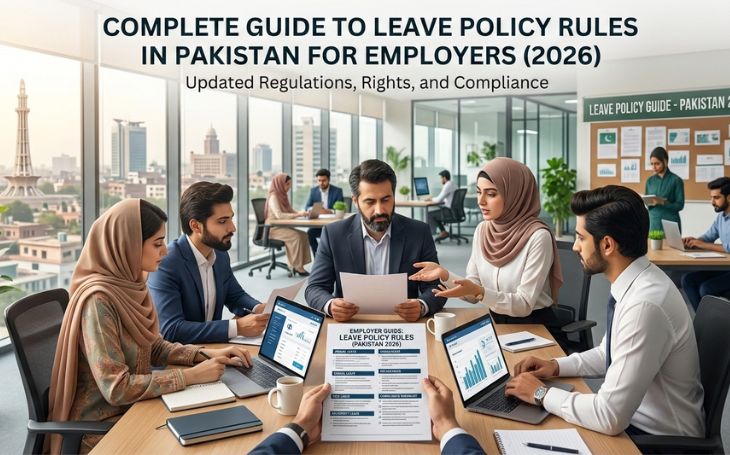
Managing employee leave is one of the most important responsibilities for employers in Pakistan. The leave policy rules in Pakistan are designed to protect employees’ rights while ensuring smooth business operations. From casual leave to maternity leave, understanding these regulations is crucial for compliance and workforce satisfaction.
Modern HR software and HRMS in Pakistan help organizations automate leave tracking, reduce errors, and ensure legal compliance. In this guide, we will explore the leave policy rules in Pakistan and how HR software can simplify leave management.
The government of Pakistan has set specific leave entitlements for employees across various sectors. Key points include:
Casual Leave (CL): Employees are typically entitled to 10 to 14 days of casual leave annually, depending on company policy.
Sick Leave (SL): Employees can take 10 to 12 days of sick leave per year. Employers may require a medical certificate for extended sick leave.
Annual Leave (AL): Full-time employees earn annual leave based on their years of service. Typically, 14 to 21 days per year is common in the private sector.
Maternity Leave: Female employees are entitled to three months of paid maternity leave under the Maternity Benefits Ordinance 1958.
Public Holidays: Employees are entitled to national and public holidays, which vary slightly across provinces.
Manual leave tracking can lead to errors, disputes, and compliance issues. HRMS in Pakistan provides an efficient way to manage all types of leave. Benefits include automated leave calculations, an approval workflow, payroll integration, and compliance tracking.
The system calculates remaining leave balances in real-time. Managers can approve or reject leave requests instantly, reducing delays. Leave deductions or adjustments are automatically applied during payroll processing. HRMS ensures that leave policies comply with Pakistan’s labor laws.
Using HR software allows HR teams to focus on strategic tasks rather than administrative leave tracking.
To maintain compliance with leave policy rules in Pakistan, employers should clearly define leave policies, including types of leave, accrual rules, and application procedures. Policies should be regularly updated according to changes in labor laws. Communication with employees is important to ensure leave policies are accessible and understandable. Leveraging HRMS to automate leave tracking reduces errors and maintains records for audits.
Not updating policies to reflect the latest labor laws, relying on spreadsheets rather than automated systems, and ignoring employee leave requests or failing to track balances are common mistakes. With HR software, companies in Pakistan can eliminate these issues and streamline leave management.
Efficiency is increased as manual effort for HR teams is reduced. Accuracy is improved with fewer errors in leave calculations. Transparency is enhanced as employees can view leave balances and request statuses. Compliance is ensured with adherence to Pakistani labor laws and company policies.
Understanding and implementing leave policy rules in Pakistan is crucial for employer compliance and employee satisfaction. HR software and HRMS in Pakistan simplify leave tracking, ensure accuracy, and improve transparency. Companies adopting these solutions benefit from increased efficiency, legal compliance, and happier employees.