


HR compliance is not optional in Pakistan.
Employers must follow labor laws, tax regulations, and social security rules. Failure to comply can lead to penalties, audits, and legal disputes.
As businesses grow, compliance becomes more complex. Manual tracking often leads to errors.
That is why many organizations now rely on digital systems to manage compliance.
If you operate in Pakistan, understanding HR compliance is critical in 2026.
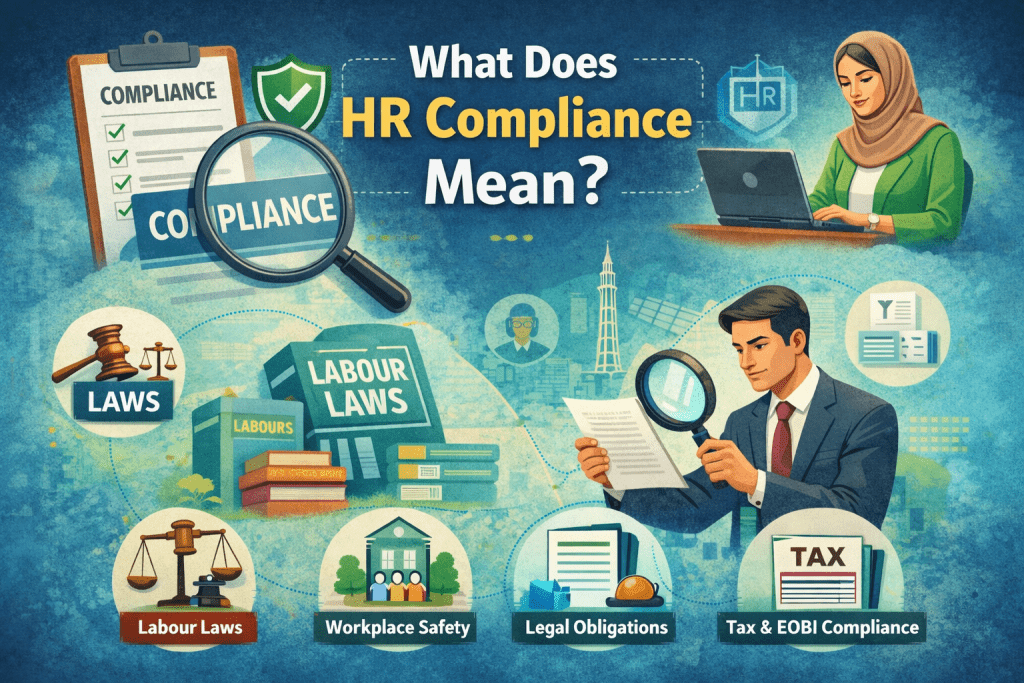
HR compliance refers to following all legal requirements related to:
Every employer must align with federal and provincial labor laws.
Non-compliance can result in:

Pakistan’s labor framework includes multiple regulations. These may vary slightly by province.
Key laws include:
Employers must stay up to date with provincial changes.
This can be challenging without structured HR systems.
Payroll compliance is one of the most critical areas.
Employers must:
Incorrect payroll processing increases audit risk.
Businesses looking for reliable payroll software in Pakistan often automate these calculations to avoid errors.
Automation reduces manual mistakes and ensures timely reporting.
The Federal Board of Revenue (FBR) plays a central role in payroll taxation.
Employers must:
Inaccurate deductions can trigger audits.
This is why many companies prefer HR systems aligned with FBR regulations.
Platforms trusted by regulatory authorities strengthen employer confidence.
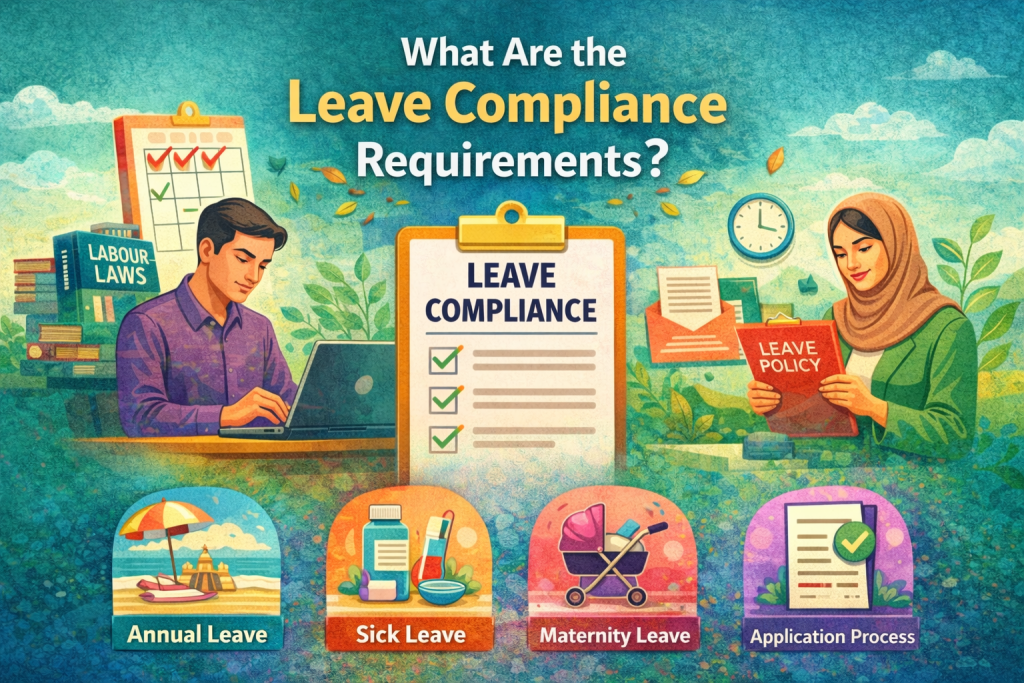
Leave policies must align with labor law.
Common requirements include:
Employers must maintain proper leave records.
Failure to properly track leave can lead to disputes during termination or audits.
Using a digital leave management system ensures accurate tracking and reporting.
EOBI and social security are mandatory for eligible employees.
Employers must:
Employers must:
Non-payment can lead to penalties and legal action.
Manual record keeping increases compliance risk.
Employment contracts must clearly define:
A written contract protects both employer and employee.
Contracts must align with labor laws. If terms violate legal requirements, they can be challenged in court.
Standardized contract templates help reduce disputes.
Startups often ignore compliance in early stages.
As companies scale, risks increase.
Common risks include:
Small mistakes can become serious legal issues.
Growing businesses should implement structured HR systems early.
A scalable HR management software solution in Pakistan helps maintain compliance as the workforce grows.
Automation simplifies compliance.
A modern HR system can:
Cloud-based systems also reduce dependency on manual spreadsheets.
For example, businesses using automated attendance management systems reduce payroll discrepancies caused by manual tracking.
Integration between attendance and payroll improves accuracy.
Labor audits can occur due to:
During audits, employers must provide:
Disorganized documentation can create serious problems.
Digital HR systems make audit preparation easier.
Penalties may include:
Repeated violations can severely impact operations.
Preventive compliance is always better than reactive correction.
Compliance should not depend
Technology plays a major role in making compliance consistent.
International HR platforms may offer a range of features.
However, local compliance needs detailed customization.
Pakistan-specific challenges include:
Localized HR platforms are designed with these factors in mind.
This reduces configuration effort and lowers compliance risk.