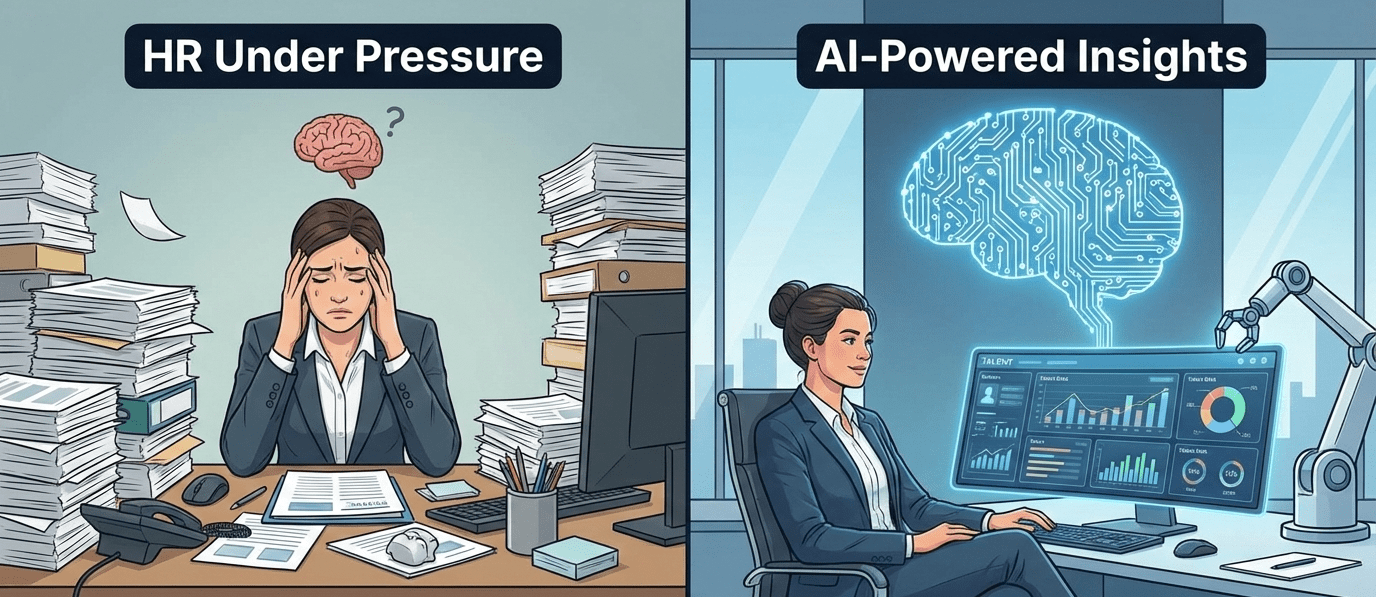

Why HR Needs AI Talent Intelligence to optimize recruitment in Pakistan involves moving beyond basic resumes to data-driven insights that predict candidate success and long-term performance. In a competitive market like Lahore, Karachi, or Islamabad, HR teams are constantly juggling massive volumes of applications, and AI helps filter the noise to identify high-potential talent instantly.
AI Talent Intelligence identifies hidden skills and matches candidates to roles based on potential rather than just past job titles, which is crucial for Pakistani businesses facing talent shortages.
By analyzing data across the candidate pipeline, AI helps recruitment officers in Lahore and Karachi find the right fit for complex roles in sectors like IT, textile, and banking without manual screening.
In Pakistan, where a single job posting can attract thousands of applicants via Rozee.pk or LinkedIn, recruiters often miss top tier candidates due to volume. AI talent intelligence tools act as an automated first-pass screening layer. They don’t just search for keywords; they understand the semantic relationship between skills, certifications, and industry experience to rank candidates objectively.
AI improves the candidate pipeline by automating stage-wise movement and ensuring that interview panels receive objective data before they even meet the applicant. This reduces time-to-hire by ensuring that only the most qualified candidates reach the final interview stages, allowing managers to focus on cultural fit and complex competency checks.
With an integrated Applicant Tracking System (ATS), recruiters can set up automated triggers. For example, once a candidate passes an AI-driven technical assessment, the system can automatically schedule a panel interview and send out meeting Invites. This seamless flow prevents candidates from dropping out of the funnel due to administrative delays, which is a common problem in the fast-paced Pakistani job market.
Scorecard discipline ensures that every interviewer evaluates candidates against the same criteria, removing personal bias and creating a structured feedback loop for better hiring. AI talent intelligence platforms like PayPeople allow HR managers to pre-define key performance indicators (KPIs) for each role, forcing panel members to provide evidence-based ratings.
When interviewers use standardized scorecards, the recruitment team can aggregate data to see which interview stages are highest-performing and where bottlenecks occur. This transparency is vital for large organizations in Faisalabad or Sialkot that manage multiple branches and need consistent hiring standards across the country.
Recruitment software ensures that offer-letter templates are legally compliant with Pakistani labor laws and integrated with e-signature tools for a smooth digital acceptance process. This includes pre-defined clauses for EOBI registration, SESSI contributions, and notice periods that are standard across industries in Pakistan.
| Stage | Owner | SLA (days) | Tools |
|---|---|---|---|
| Job Posting | Recruiter | 1-2 | LinkedIn, Rozee, Indeed |
| Initial Screening | AI Engine | <1 | ATS Scorecards |
| Panel Interviews | HOD / Manager | 3-5 | Integrated Calendars |
| Offer Extension | HR Director | 1 | Digital Signatures |
| HRMS Handoff | Ops Team | <1 | PayPeople Connector |
A smooth ATS-to-HRMS handoff eliminates the need for manual data entry, ensuring that new hire data flows directly into payroll, attendance, and EOBI compliance modules. This integration ensures that the moment a candidate signs their offer, their record is created in the company’s HR master file with 100% accuracy.
For Pakistani businesses, this handoff is the most critical step for compliance. It ensures that the employee’s joining date matches their EOBI and PESSI registration records. By automating this, HR teams avoid the risk of missing statutory filing deadlines, which can lead to penalties from the FBR or provincial social security departments.
In conclusion, understanding Why HR Needs AI Talent Intelligence is essential for any growing business in Pakistan looking to automate its hiring loop. By leveraging high-end recruitment software, your team can move from manual spreadsheets to a compliant, efficient, and data-driven candidate pipeline. Book a demo today to see how PayPeople can transform your recruitment strategy.
SMEs adopt Why HR Needs AI Talent Intelligence from PayPeople for three repeatable reasons: native EOBI / SESSI / PESSI and FBR-tax-slab handling, per-employee-per-month PKR billing that scales with headcount, and a Pakistan-based support team that answers in working hours. Most teams move off Excel or a legacy desktop HRMS once the monthly payroll run takes more than two working days, or once a multi-branch payroll consolidation becomes a source of reconciliation errors.
The most-used modules are payroll, biometric attendance and leave — these three together cover 80% of the day-to-day HR workload for a 50–250-employee SME. Recruitment, performance and expense modules are typically rolled out in a second phase 60–90 days after go-live, once managers are comfortable with self-service and approval workflows. PayPeople bills per-employee-per-month in PKR, starting around Rs. 400 for core HR + payroll, with volume discounts above 100 employees and custom enterprise pricing for multi-branch setups.
Compliance is the deal-decider. EOBI and SESSI/PESSI contribution rates are maintained centrally and pushed to every customer’s payroll run, so you don’t manually patch tax tables when the federal budget changes. FBR income-tax slabs for salaried employees update the same way. The full monthly return — EOBI form, SESSI/PESSI form, FBR salary withholding statement — is generated from one screen, signed off and archived in the audit trail. Multi-branch payroll consolidates into a single GL-coded export ready for the accounting team.
Getting started: book a 30-minute demo at paypeople.pk/book-a-demo, the team hands you a 7-day sandbox with sample employees and a pre-configured tax slab, and you run one parallel-payroll month against your existing process before cutover. Total go-live for a typical Pakistani SME is 2–4 weeks; multi-branch enterprise rollouts take 6–8 weeks. WhatsApp +92 300 0800498 or email sales@paypeople.pk to start.
AI Talent Intelligence is essential in Pakistan to manage high applicant volumes from platforms like Rozee.pk. Why HR Needs AI Talent Intelligence is proven by its ability to filter thousands of resumes instantly, ensuring recruiters in Lahore and Karachi find the top 5% of talent without manual fatigue.
Yes, PayPeople’s recruitment software fully integrates with LinkedIn, Indeed, and local job boards like Rozee.pk. This allows HR teams to manage their entire candidate pipeline in one central ATS while tracking which source provides the best ROI for their hiring budget.
Scorecard discipline is a structured evaluation method where every interviewer rates candidates on the same KPIs. In Pakistani SMEs, this removes favoritism and ensures that panel feedback is based on data, leading to fairer hiring decisions and a more professional candidate experience.
The ATS-to-HRMS handoff is the digital sync where a hired candidate’s data moves into the payroll and EOBI module. In Pakistan, this prevents manual entry errors and ensures that joining dates, tax slabs, and statutory registrations are synchronized from day one of employment.
Modern recruitment software in Pakistan should include digital offer-letter templates that cover gross salary breakdowns, EOBI/SESSI contribution clauses, and FBR-compliant tax details. PayPeople provides e-signature support to speed up the acceptance process for candidates in competitive markets like Karachi.
By using Why HR Needs AI Talent Intelligence, companies can reduce time-to-hire by 50%. Automated screening hubs, instant scorecard notifications for panels, and digital offer extensions remove administrative bottlenecks that typically slow down hiring in large Pakistani organizations.