


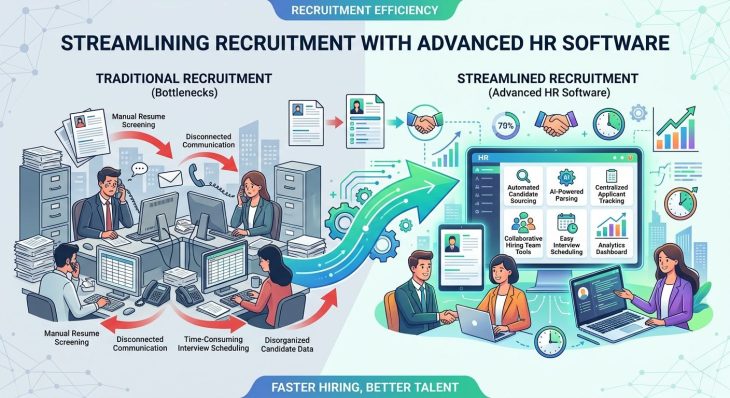
In today’s fast-paced business world, recruitment is more challenging than ever. Companies need efficient solutions to attract top talent. This is where advanced HR software comes into play.
HR software integrates various HR functions into a single platform. It enhances efficiency and streamlines recruitment processes. This technology is a game-changer for HR professionals and business leaders.
Recruitment software tools automate candidate sourcing, screening, and tracking. They save time and reduce manual tasks. This allows HR teams to focus on strategic initiatives.
Talent management systems help identify and nurture potential leaders. They support long-term success by developing internal talent. This is crucial for sustaining growth in any organization.
Performance management software provides tools for setting goals and tracking progress. It ensures employees are aligned with company objectives. This leads to improved performance and engagement.
HR document management software ensures secure and organized storage of employee records. It simplifies compliance and reduces paperwork. This is vital for maintaining data integrity.
Workforce management software aids in scheduling and attendance tracking. It optimizes productivity and ensures compliance. This is essential for effective workforce management.
Advanced HR software is not just a tool; it’s a strategic asset. It transforms recruitment and enhances overall workforce management. Embracing this technology is key to staying competitive.
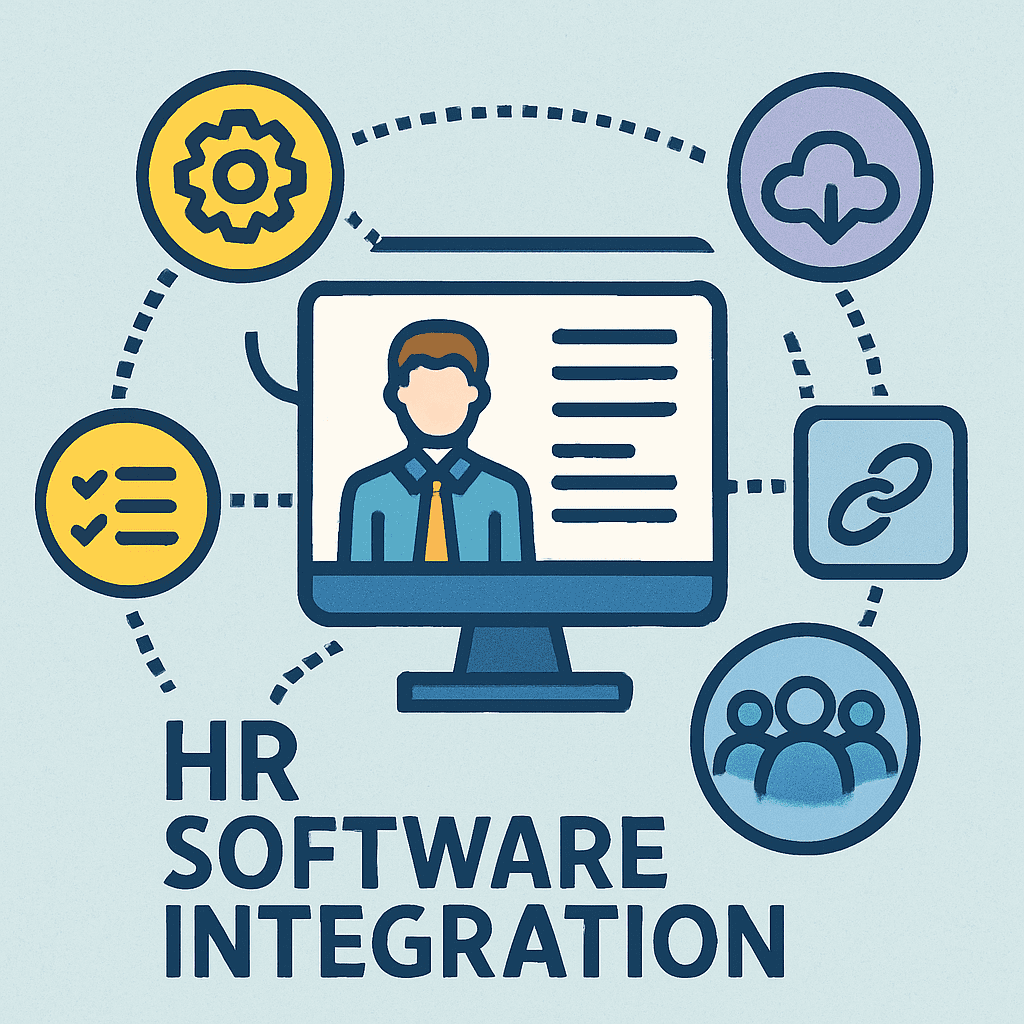
HR software is the backbone of modern recruitment processes. It brings multiple HR functions under one umbrella. This integration enhances both efficiency and effectiveness.
A primary feature of HR software is centralization. It consolidates all HR tasks into a single platform. This ensures seamless collaboration and data flow.
Modern recruitment processes are now heavily reliant on technology. This software aids HR professionals by simplifying complex tasks. It reduces the time and effort needed for manual processes.
HR software is designed with user-friendly interfaces. It’s accessible and easy for HR teams to navigate. This reduces the learning curve and boosts productivity.
Moreover, advanced HR software provides customizable features. Organizations can tailor solutions to fit specific needs. This adaptability makes it suitable for various industries.
Key benefits of HR software include:
The future of recruitment depends on adopting such technologies. Companies are increasingly realizing the importance of automation in HR. Leveraging these tools helps keep a competitive edge.
HR software ensures compliance with labor laws and regulations. It simplifies HR document management, reducing errors. Therefore, businesses can manage risks effectively.
By centralizing HR tasks, organizations improve workflow and communication. This connectivity fosters better team collaboration. It removes barriers and streamlines operations.
Organizations that invest in HR software find that it brings tangible benefits. Increased efficiency, better compliance, and improved recruitment are some. Thus, it’s evident that HR software is indispensable in modern HR practices.
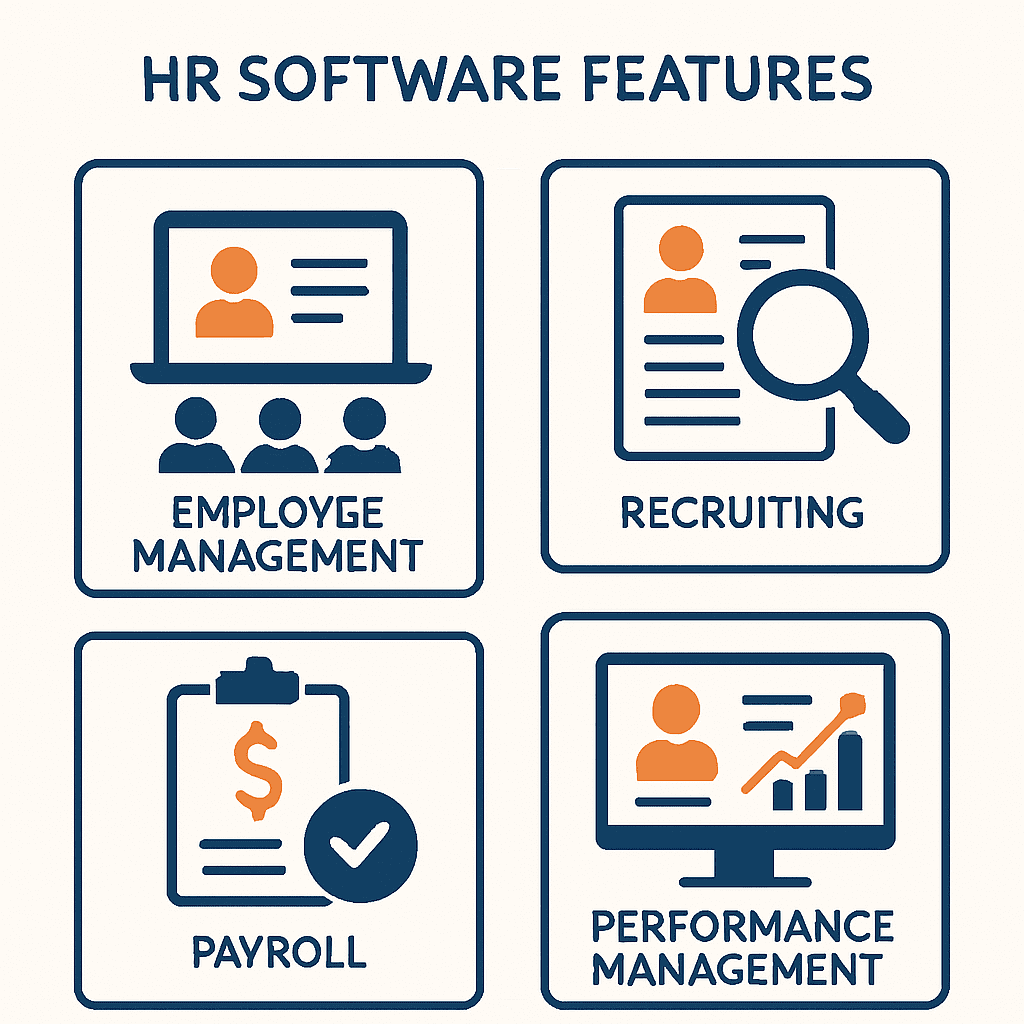
Advanced HR software offers a plethora of features. Each feature aims to optimize different HR functions. This makes it an essential tool for any HR team.
One notable feature is automation. HR software automates repetitive tasks, such as data entry. This automation significantly reduces the potential for human error.
Real-time analytics is another standout feature. The software provides valuable insights into workforce metrics. These insights help HR teams make informed, data-driven decisions.
Customizability is crucial for businesses. HR software offers customizable dashboards. These can be tailored to meet specific business needs and preferences.
Integration capabilities ensure seamless data flow. Different HR functions are interconnected. This connectivity streamlines communication and workflow across departments.
The software also supports mobile accessibility. HR professionals can manage tasks on the go. This flexibility is vital in today’s dynamic work environment.
Security is a top priority. HR software includes robust data security measures. It ensures the protection of sensitive employee information.
Key features of advanced HR software include:
Employee self-service portals are a great advantage. These portals empower employees to handle HR-related tasks. Tasks like updating personal information are completed without HR intervention.
Finally, the software’s compliance capabilities are essential. It helps organizations adhere to labor laws. This feature mitigates legal risks and ensures regulatory compliance.
In conclusion, the wide array of features makes HR software indispensable. It simplifies and enhances various HR functions. Leveraging these features unlocks the full potential of your HR team.
Recruitment software tools are revolutionizing hiring practices. They automate time-consuming tasks in recruitment. This automation significantly enhances efficiency in hiring processes.
Candidate sourcing is a critical phase. Recruitment tools simplify finding potential candidates. They integrate with various platforms to widen the talent pool.
Screening candidates takes immense effort. These software tools streamline the screening process. Automated systems quickly identify qualified candidates for further assessment.
Tracking applications can become chaotic. Recruitment software organizes and tracks applications efficiently. This organization reduces the likelihood of errors and missed opportunities.
Integration with social media is another advantage. Leveraging social media platforms widens reach. This integration ensures broader visibility of job postings.
Communication with candidates is more effective. Tools facilitate timely updates and feedback. Candidate engagement improves with transparent communication throughout the hiring process.
Recruitment software provides valuable analytics. Analytics reveal important hiring metrics. Metrics like time-to-hire and cost-per-hire guide strategic decisions.
Key benefits of recruitment software tools include:
In today’s competitive job market, speed is crucial. Recruitment tools fast-track the hiring process. They ensure top candidates are not lost to competitors.
These tools also support diversity initiatives. They help eliminate bias in recruitment. Unbiased tools ensure a fair and inclusive hiring process.
By adopting recruitment software tools, companies enhance their employer brand. A smooth hiring process projects professionalism. This positively impacts how candidates perceive the organization.
In summary, recruitment software tools are indispensable for modern hiring. Their role in transforming recruitment is undeniable. Organizations adopting these tools enjoy a competitive hiring advantage.
Talent management systems are vital for nurturing potential leaders. They offer tools for assessing and developing employee skills. This process ensures a pipeline of qualified leaders.
Identifying high-potential employees is key. These systems use data to highlight potential within teams. Companies can then focus on specific development paths for these individuals.
Talent management systems support succession planning. They provide insights into employee readiness for new roles. This foresight helps organizations avoid leadership gaps during transitions.
Employee engagement is enhanced through these systems. They facilitate personalized development plans and career paths. Employees feel valued and motivated with clear growth opportunities.
Collaboration across departments is crucial for talent management success. These systems foster collaboration in identifying talent needs. Unified efforts align leadership development with organizational goals.
Analytics from talent management systems are powerful. They provide metrics for workforce planning. Data-driven insights help in making strategic talent decisions.
Key features of talent management systems include:

Integrating these systems ensures long-term success. Companies can adapt to changing market needs by nurturing internal talent. The focus shifts from external hiring to internal development.
Talent management systems are not static. They evolve with the organization’s needs and market trends. Keeping the system updated maximizes its effectiveness and relevance.
In conclusion, talent management systems are essential. They align individual growth with organizational vision. Their integration is a strategic investment in the company’s future leadership and success.
Performance management software is pivotal for fostering employee development. It offers tools for setting and tracking goals, which are essential for measuring progress.
Regular feedback is a core component. This software allows managers to provide continuous constructive feedback. Feedback helps employees improve and stay aligned with company objectives.
Customized performance reviews are possible with these systems. They tailor reviews to specific roles and departments. This ensures fair and relevant evaluations.
The software promotes transparency in evaluations. Employees understand their performance metrics. Clear communication reduces misunderstandings and promotes improvement.
Key features of performance management software include:

Performance management software enhances productivity. Employees become aware of their strengths and areas for improvement. This awareness drives growth and satisfaction.
Integration with other HR tools boosts its effectiveness. Seamless data flow aids in cohesive performance tracking. This holistic approach supports strategic HR decisions.
Overall, performance management software is a catalyst for growth. It aligns individual achievements with organizational goals. Implementing it can transform how a company nurtures talent and achieves success.
HR document management software is essential for secure storage and access. It organizes critical employee data, making retrieval simple and efficient.
Secure storage is paramount. The software ensures that only authorized personnel have access to sensitive information. Strong encryption and access controls keep data safe.
Compliance with legal standards is a key feature. The software supports organizations in complying with labor laws and data protection regulations. Automated compliance checks minimize the risk of non-compliance.
Key benefits of HR document management software include:
Efficient document management reduces administrative burdens. It saves time spent on manual searches, allowing HR teams to focus on strategic tasks. Streamlined processes lead to better productivity and enhanced security.
Implementing HR document management software elevates organizational efficiency and minimizes compliance risks. It is an invaluable tool for businesses aiming to protect their data and align with regulations.
Workforce management software is crucial for handling complex scheduling needs. It ensures smooth operations by streamlining task assignments and tracking employee shifts.
The software offers automated scheduling features. Managers can easily adjust shifts and accommodate last-minute changes. This flexibility helps maintain productivity and employee satisfaction.

Key features of workforce management software include:
Attendance tracking is another vital aspect. The software accurately records work hours, reducing errors and time theft. Real-time data aids in monitoring workforce productivity effectively.
Workforce management software not only boosts efficiency but also ensures compliance with labor regulations. It provides tools for managing leave requests, overtime, and staff availability. Businesses benefit from reduced labor costs and improved resource allocation, creating a more dynamic and responsive workforce.
HR analytics software transforms raw data into actionable insights. It enables organizations to make informed decisions based on real-time employee data. This leads to strategic HR planning and improved workforce management.
With HR analytics, businesses can identify trends and patterns. This aids in forecasting future workforce needs and addressing potential challenges proactively. Having a data-driven approach ensures that HR strategies align with business goals.

HR analytics software typically offers:
One of the most significant advantages is predictive analytics. This feature helps in anticipating changes, such as turnover risks or future hiring needs. By doing so, companies can prepare and strategize effectively.
Furthermore, data visualization tools in HR analytics software simplify complex data. This allows HR professionals to quickly interpret and present information. Ultimately, this enhances communication with leadership teams, fostering a more informed decision-making environment. Organizations that leverage HR analytics software effectively gain a competitive edge by optimizing their HR functions, improving employee satisfaction, and ultimately achieving better business outcomes.
Handling payroll efficiently is crucial for any business. Payroll software solutions simplify compensation management by automating calculations and deductions. This reduces errors and saves time for HR professionals.

These solutions offer comprehensive features, including:
Automated tax calculations ensure compliance and accuracy. The software updates tax rates and rules automatically, reducing manual input and potential mistakes. Direct deposit options enhance convenience for employees, ensuring timely payments.
Compliance is another critical aspect managed by payroll software. It ensures adherence to labor laws and regulations, minimizing legal risks for the company. Detailed reporting tools provide insights into payroll expenses, helping in financial planning.
Overall, integrating payroll software solutions supports a seamless compensation process. It fosters trust and transparency between employees and management. Such systems not only ensure efficiency but also contribute to employee satisfaction, thereby enhancing workforce morale and reducing turnover.
AI and automation are revolutionizing HR software. These technologies enhance recruitment by automating repetitive tasks. Automation saves time and reduces human errors in the process.
In recruitment, AI can predict candidate success. This is achieved through algorithms that analyze resumes and interview responses. Automation in recruitment includes:
Such innovations reduce the workload of HR teams, allowing them to focus on strategy. Candidate screening becomes more efficient, with AI identifying the best matches for job roles.
AI also improves candidate engagement. Chatbots can respond to queries instantly, enhancing the recruitment experience. This helps maintain a positive relationship with potential hires.
Furthermore, AI supports diversity by ensuring unbiased recruitment practices. By eliminating human biases, AI-powered tools create a fairer process. In sum, AI and automation not only streamline operations but also improve the quality of talent acquired and foster a more equitable work environment.
Successful implementation of HR software requires careful planning. Start with a thorough assessment of your organization’s needs. Understanding these needs helps in choosing the right HR solutions.

Engage all key stakeholders early in the process. Their input ensures the software meets diverse departmental needs. Regular communication keeps everyone aligned with the project’s goals.
Training is critical to successful adoption. Ensure comprehensive training sessions for all users. This minimizes resistance and maximizes software utilization.
Consider these best practices:
Plan for ongoing support and updates. This maintains the software’s effectiveness and relevance over time. A dedicated support team can resolve technical issues quickly, ensuring minimal disruption.
Lastly, measure the software’s impact through key performance indicators. Regular assessments help evaluate its effectiveness and make necessary adjustments. Following these best practices ensures a smooth transition and maximizes the software’s potential to improve HR functions.
Adopting HR software can pose various challenges, but they can be overcome with strategic planning. One major challenge is resistance to change. Employees may feel overwhelmed by new technology, so it’s essential to communicate its benefits clearly.

Data migration from old systems to new platforms often creates roadblocks. Proper planning and phased implementation help manage this process. Ensuring data accuracy during migration is vital for seamless operation.
Here are strategies to tackle common adoption issues:
Cost concerns can also deter companies from upgrading their systems. However, the long-term benefits of HR software, including increased efficiency and productivity, typically justify the investment. Evaluating the return on investment can ease financial apprehensions.
By addressing these challenges with a proactive approach, organizations can smoothly transition to new HR software. This ensures better alignment with business goals and enhances overall HR management efficiency.
HR software is rapidly evolving to meet the dynamic needs of businesses. One of the key trends is the integration of artificial intelligence and machine learning. These technologies enhance recruitment processes by predicting candidate success and streamlining talent management.

Cloud-based solutions are gaining traction because they offer scalability and flexibility. Companies are increasingly seeking software that supports remote and hybrid work environments. This trend aligns with the growing demand for mobile access to HR platforms.
Looking forward, expect the following advancements in HR software:
Employee self-service portals will become more intuitive, empowering employees to take charge of their HR tasks. This shift reduces administrative burdens on HR teams and improves employee satisfaction.
The future of HR software promises tools that not only streamline HR processes but also contribute significantly to strategic business outcomes. By staying informed about these trends, businesses can maintain a competitive edge in workforce management.
Advanced HR software is a game-changer for recruitment and workforce management. It empowers HR teams to automate tedious tasks, allowing focus on strategic initiatives. Efficient processes result in better hiring outcomes and increased employee satisfaction.
Organizations that embrace these tools see marked improvements in productivity and compliance. HR software supports everything from recruitment to payroll, ensuring all operations are streamlined. The integration of various functions into one platform enhances data flow and decision-making.
To fully realize the benefits, it’s essential to stay up to date with technological advancements. Regularly upgrading systems ensures they meet evolving business needs. As HR software continues to evolve, businesses that adapt swiftly will maintain a strong competitive advantage. By leveraging these tools, companies can drive growth, enhance employee experiences, and achieve strategic goals effectively.