


Recruitment Software in Karachi helps modern organizations eliminate unconscious bias by replacing subjective “gut feelings” with data-driven evaluation frameworks and structured hiring pipelines. In a competitive talent hub like Karachi, using an Applicant Tracking System (ATS) ensures that every candidate from Clifton to Nazimabad is judged solely on their merit and skill set rather than demographic background.
Recruitment Software in Karachi helps reduce bias by standardizing the evaluation process across all departments. By using blind resume screening features, the software can hide names, photos, and gender-identifying information, forcing hiring managers to focus on qualifications.
In Karachi’s diverse corporate sector, this ensures that talent is sourced from a wider pool, leading to more inclusive teams and better organizational performance.
Structured scorecards are a core feature of modern recruitment software that prevents interview panel bias. Instead of general feedback like “they felt like a good fit,” managers must rate candidates on specific KPIs and competencies defined before the job was posted.
This objective approach is essential for large enterprises in Karachi where multiple stakeholders are involved in the hiring loop, ensuring consistency across every interview stage.
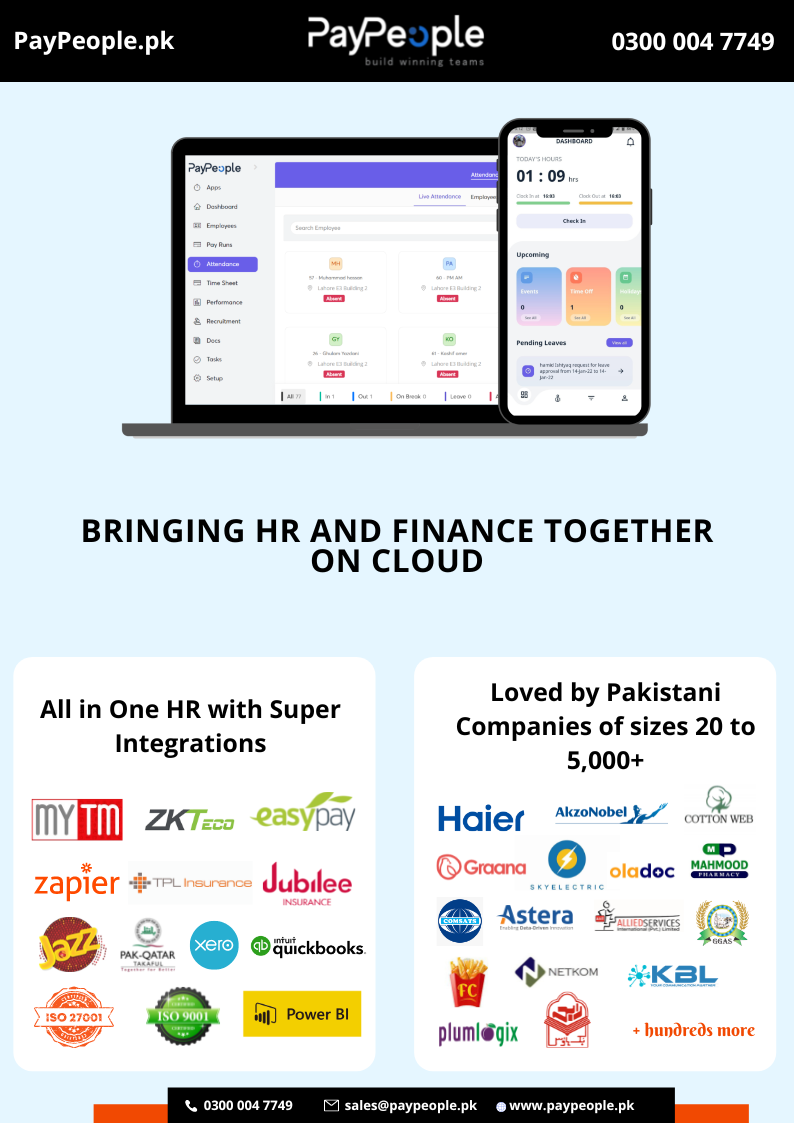
By integrating directly with major job portals like Rozee.pk, LinkedIn, and Indeed, recruitment software allows Karachi-based HR teams to broadcast openings to a massive, varied audience simultaneously. This broad reach prevents “referral bias,” where existing employees only recommend people from their immediate social circles.
Broadening the top of the funnel is the first step toward building a truly diverse workforce in Pakistan.
Cloud-based recruitment software in Pakistan has become highly affordable, with subscription models designed for growing businesses. Most SMEs in Karachi find that the cost of an ATS is significantly lower than the expense of a “bad hire” caused by biased or inefficient processes.
PayPeople offers local PKR pricing, making it easier for Pakistani firms to scale their hiring without worrying about dollar fluctuations.
| Stage | Owner | SLA (Days) | Tools |
|---|---|---|---|
| Job Posting | HR Manager | 1-2 | ATS Multi-Poster |
| Initial Screening | Recruiter | 3-5 | Blind CV Screening |
| Panel Interviews | Dept Head | 5-7 | Scorecards & Feedback |
| Offer Generation | HR Director | 1-2 | Offer Letter Templates |
| Onboarding | Operations | 1 | HRMS Integration |
Yes, a top-tier recruitment system facilitates a smooth handoff from the hiring pipeline to the HRMS. Once a candidate is marked as “hired” in the Karachi recruitment portal, their data is automatically synced to create an employee profile. This ensures that EOBI registration and SESSI compliance are handled immediately upon joining, preventing administrative delays and legal risks for the company.
Implementing Recruitment Software in Karachi is no longer just a luxury—it is a necessity for firms aiming for fairness and efficiency. By automating the candidate pipeline and utilizing objective feedback loops, Karachi businesses can build more representative and high-performing teams. Book a demo today to see how PayPeople can transform your hiring office.
SMEs in Karachi Help Reduce Bias Hiring Cc79432 adopt Recruitment Software in Karachi from PayPeople for three repeatable reasons: native EOBI / SESSI / PESSI and FBR-tax-slab handling, per-employee-per-month PKR billing that scales with headcount, and a Pakistan-based support team that answers in working hours. Most teams move off Excel or a legacy desktop HRMS once the monthly payroll run takes more than two working days, or once a multi-branch payroll consolidation becomes a source of reconciliation errors.
The most-used modules in Karachi Help Reduce Bias Hiring Cc79432 are payroll, biometric attendance and leave — these three together cover 80% of the day-to-day HR workload for a 50–250-employee SME. Recruitment, performance and expense modules are typically rolled out in a second phase 60–90 days after go-live, once managers are comfortable with self-service and approval workflows. PayPeople bills per-employee-per-month in PKR, starting around Rs. 400 for core HR + payroll, with volume discounts above 100 employees and custom enterprise pricing for multi-branch setups.
Compliance is the deal-decider. EOBI and SESSI/PESSI contribution rates are maintained centrally and pushed to every customer’s payroll run, so you don’t manually patch tax tables when the federal budget changes. FBR income-tax slabs for salaried employees update the same way. The full monthly return — EOBI form, SESSI/PESSI form, FBR salary withholding statement — is generated from one screen, signed off and archived in the audit trail. Multi-branch payroll consolidates into a single GL-coded export ready for the accounting team.
Getting started in Karachi Help Reduce Bias Hiring Cc79432: book a 30-minute demo at paypeople.pk/book-a-demo, the team hands you a 7-day sandbox with sample employees and a pre-configured tax slab, and you run one parallel-payroll month against your existing process before cutover. Total go-live for a typical Pakistani SME is 2–4 weeks; multi-branch enterprise rollouts take 6–8 weeks. WhatsApp +92 300 0800498 or email sales@paypeople.pk to start.
Recruitment Software in Karachi reduces bias by using blind resume screening, structured scorecards, and automated ranking based on skills. These features ensure that candidates are evaluated on objective criteria rather than personal identifying information, creating a fairer hiring environment for all applicants in Pakistan.
Yes, PayPeople’s recruitment software integrates with major Pakistani platforms like Rozee.pk, as well as global sites like LinkedIn and Indeed. This allows Karachi HR managers to post jobs once and reach thousands of diverse candidates across multiple channels instantly.
Absolutely. Once a candidate accepts an offer in the recruitment module, their data flows directly into the core HRMS. This allows for immediate EOBI registration and SESSI onboarding, ensuring your Karachi office remains compliant with provincial labor laws from day one.
Modern recruitment software in Pakistan typically costs between Rs. 400 to Rs. 800 per employee per month, though recruitment-only modules may have flat-fee pricing depending on the volume of active job postings. This makes it highly accessible for Karachi SMEs compared to traditional headhunting fees.
Scorecards require interviewers to rate candidates on specific competencies (e.g., technical skills, cultural fit). This prevents vague feedback and ensures every applicant in the Karachi hiring loop is measured against the same standard, significantly improving the quality and fairness of hiring decisions.
By automating job postings, screening, and interview scheduling, Karachi businesses can reduce their time-to-hire by up to 40%. The software identifies bottlenecks in the pipeline, allowing HR managers to address delays in specific departments or interview stages.