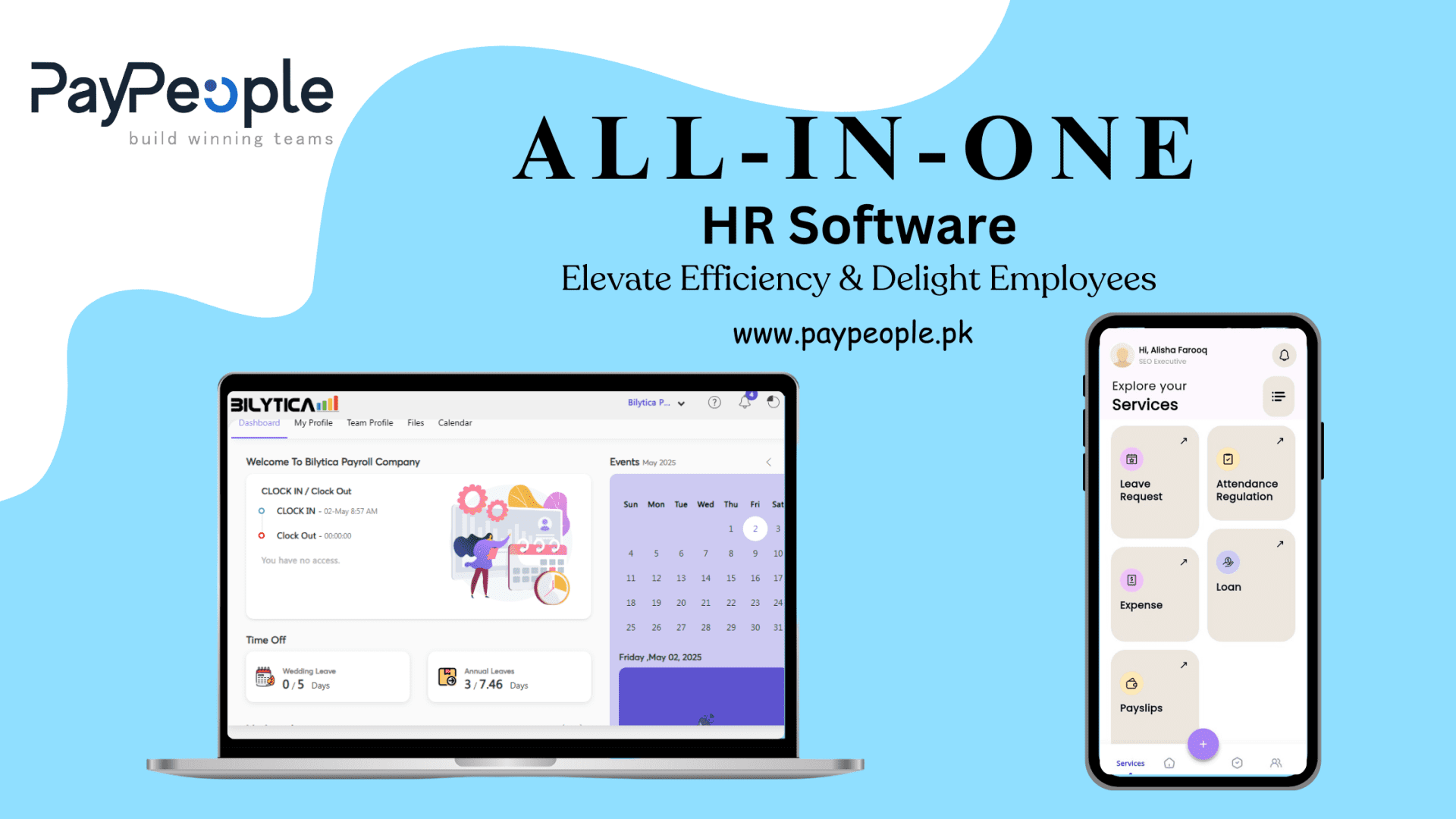
PayPeople builds its software with a deep understanding of Pakistan’s HR landscape, ensuring localization, legal compliance, and adaptability to business needs.



In the evolving landscape of business technology, Human Resource (HR) software continues to play a vital role in streamlining workforce management and enhancing organizational productivity. In Pakistan, where digital transformation is accelerating across industries, the adoption of advanced HR software is becoming a necessity rather than a choice.
With the growing demand for automation, compliance, and employee engagement, businesses are looking to modern HR solutions to support their growth and competitiveness. As we approach 2025, several transformative trends are emerging in the HR software domain that are expected to redefine how companies in Pakistan manage their human capital.
This article delves into the top HR software trends businesses in Pakistan should anticipate in 2025 and how these advancements will shape the future of HR operations.
| Module | Self-Service | Workflow Builder | Price (PKR/employee/month) |
|---|---|---|---|
| Core HR & Directory | Yes | Basic | Rs. 200 |
| Leave & Expense | Yes | Customizable | Rs. 300 |
| Performance & KPI | Yes | Advanced | Rs. 450 |
| Full HR Suite | Yes | Unlimited | Rs. 600 |
Recruitment is one of the most time-consuming HR functions. In 2025, HR software in Pakistan is expected to leverage Artificial Intelligence (AI) to streamline and enhance the recruitment process. Modern HR platforms now include AI-powered Applicant Tracking Systems (ATS) that can automatically screen resumes, match candidate profiles with job descriptions, and suggest the most suitable applicants.
These features help recruiters in Pakistan save time and improve the quality of hires.
AI also assists in minimizing bias in hiring decisions and offers predictive analytics to identify candidates who are more likely to succeed in specific roles.
Employee onboarding is becoming increasingly digital in Pakistan. HR software is transforming the way organizations welcome new hires by providing a fully automated onboarding experience. In 2025, more businesses will use cloud-based platforms to manage all onboarding tasks—such as signing offer letters, submitting identification documents, and completing policy trainings—electronically.
This not only accelerates the onboarding timeline but also enhances the employee experience.
Companies can maintain centralized records, ensure policy compliance, and reduce paperwork through a streamlined digital process.
Chatbots are no longer a novelty; they are becoming an integral part of HR software. In Pakistan, businesses are incorporating chatbot systems to handle routine HR inquiries. From applying for leave to checking salary slips and understanding company policies, employees can interact with these bots anytime via desktop or mobile applications.
This feature reduces the administrative burden on HR teams and ensures quick resolution of queries, improving employee satisfaction.
As Urdu-language support improves in chatbot technology, these tools are becoming more inclusive and accessible for diverse workforces across the country.
Traditional annual performance reviews are gradually being replaced by continuous feedback systems. HR software in 2025 will include advanced performance management modules that allow managers and employees to set goals, track progress, and provide feedback in real-time.
These tools use visual dashboards and performance indicators to present a clear picture of employee contributions. In Pakistan, where workplace dynamics are rapidly evolving, this trend is helping businesses align individual goals with organizational objectives and enhance productivity.
Payroll is one of the most critical and sensitive aspects of HR. Manual payroll processes are prone to errors and delays. In 2025, HR software in Pakistan will be increasingly relied upon to automate payroll processing, tax calculations, benefits management, and compliance reporting.
Advanced payroll systems will accommodate local tax laws, EOBI, gratuity calculations, and other statutory requirements unique to Pakistan.
By using reliable payroll modules, companies ensure accurate salary disbursement and reduce the risk of compliance-related penalties.
Modern HR software integrates seamlessly with biometric systems, mobile devices, and even facial recognition tools to automate attendance and time tracking.
In 2025, businesses in Pakistan are expected to widely implement these features, especially in sectors with large workforces or field-based teams.
These tools provide real-time tracking, prevent attendance fraud, and generate analytical reports for management. Employees can mark attendance remotely, which is ideal for hybrid or remote work models increasingly seen across Pakistani organizations.
The transition to cloud-based HR software is gaining momentum in Pakistan. Cloud systems offer flexibility, scalability, and remote accessibility, making them ideal for growing businesses and distributed teams.
HR professionals can access employee data, generate reports, and perform critical tasks from anywhere without relying on local infrastructure.
In 2025, businesses are expected to continue moving away from legacy on-premise systems in favor of secure and cost-effective cloud platforms that support real-time decision-making.

With the growing use of smartphones across Pakistan, HR software providers are optimizing their platforms for mobile use.
From applying for leave to submitting performance reviews and attending training modules, employees can now perform essential HR tasks through mobile apps. This is especially beneficial for remote teams, field workers, and employees with limited access to desktop systems.
Mobile-first HR solutions enhance engagement, transparency, and responsiveness, which are key to building a positive workplace culture.
Training and development are essential for employee growth and retention. In 2025, HR software in Pakistan will include AI-driven Learning Management Systems that offer personalized learning paths based on job roles, performance feedback, and employee interests.
Employees can access training modules, attend virtual sessions, and complete assessments through the platform. HR managers can track progress and identify skill gaps to design relevant development programs.
This trend reflects the shift toward continuous learning and career progression within organizations.
Advanced HR software solutions now include predictive analytics capabilities. These tools analyze historical employee data to forecast future trends such as attrition risk, absenteeism, or training needs.
In 2025, businesses in Pakistan will increasingly use predictive analytics to make informed decisions about workforce planning, hiring, and engagement strategies.
With access to real-time data and predictive insights, HR departments can shift from reactive to proactive management, leading to better employee retention and improved business outcomes.
The demand for HR software in Pakistan is driven by the need for efficiency, accuracy, and data-driven decision-making. Organizations that continue to rely on manual processes or outdated systems face challenges in compliance, scalability, and employee engagement.
Modern HR software addresses these challenges by offering an all-in-one solution that is secure, user-friendly, and compliant with local regulations.
Whether a business is a startup in Lahore, a manufacturing firm in Karachi, or a services company in Islamabad, implementing the right HR software is key to operational success in 2025.
PayPeople is a trusted provider of HR software in Pakistan, delivering a comprehensive suite of features designed for local businesses. With modules for payroll, attendance, recruitment, performance, onboarding, and training, PayPeople offers a single platform to manage the entire employee lifecycle.
Key capabilities include:
AI-enabled recruitment and applicant tracking
Digital onboarding and employee profiles
Cloud-based payroll with automatic compliance
Mobile app for attendance, leave, and requests
Performance tracking and goal alignment tools
The year 2025 marks a critical point in the evolution of HR software in Pakistan. As businesses continue to modernize their HR functions, the adoption of intelligent, integrated, and user-friendly software will become central to achieving operational excellence.
From AI-driven recruitment to predictive analytics, the trends discussed above signal a shift toward smarter, more agile HR practices. Organizations that embrace these trends will not only gain efficiency and compliance but also build a stronger, more engaged workforce.
With PayPeople as your chosen HR software provider, your organization is strategically positioned to navigate the future of human resource management in Pakistan with clarity and confidence.

HR software in Pakistan centralizes employee records, automates leave workflows, and ensures compliance with local reporting standards. By digitizing documents in a secure vault, businesses reduce administrative overhead and improve data accuracy across their entire workforce management lifecycle.
A modern Human Resource System provides a self-service portal where employees can update personal data, download digital contracts, and view company policies. This reduces the number of routine queries handled by the HR department and improves overall transparency.
Leading HR software in Pakistan uses role-based access control (RBAC) to ensure that only authorized personnel can view sensitive information like salary data or CNICs. Cloud-based systems like PayPeople also maintain detailed audit trails for every data change.
Most Pakistani SMEs can fully deploy core HR software modules within 2 to 4 weeks. This timeline includes importing employee master data, setting up reporting hierarchies, and training the team on the self-service mobile app.
Yes, advanced HR software allows you to build custom approval chains for leave requests, expense claims, and document requisitions. You can define specific managers or department heads who must sign off on requests within the system.
Modern HR software trends in Pakistan prioritize integration. PayPeople, for example, connects core HR data directly with monthly payroll and biometric attendance tracking to ensure a seamless flow of data from check-in to final payslip.