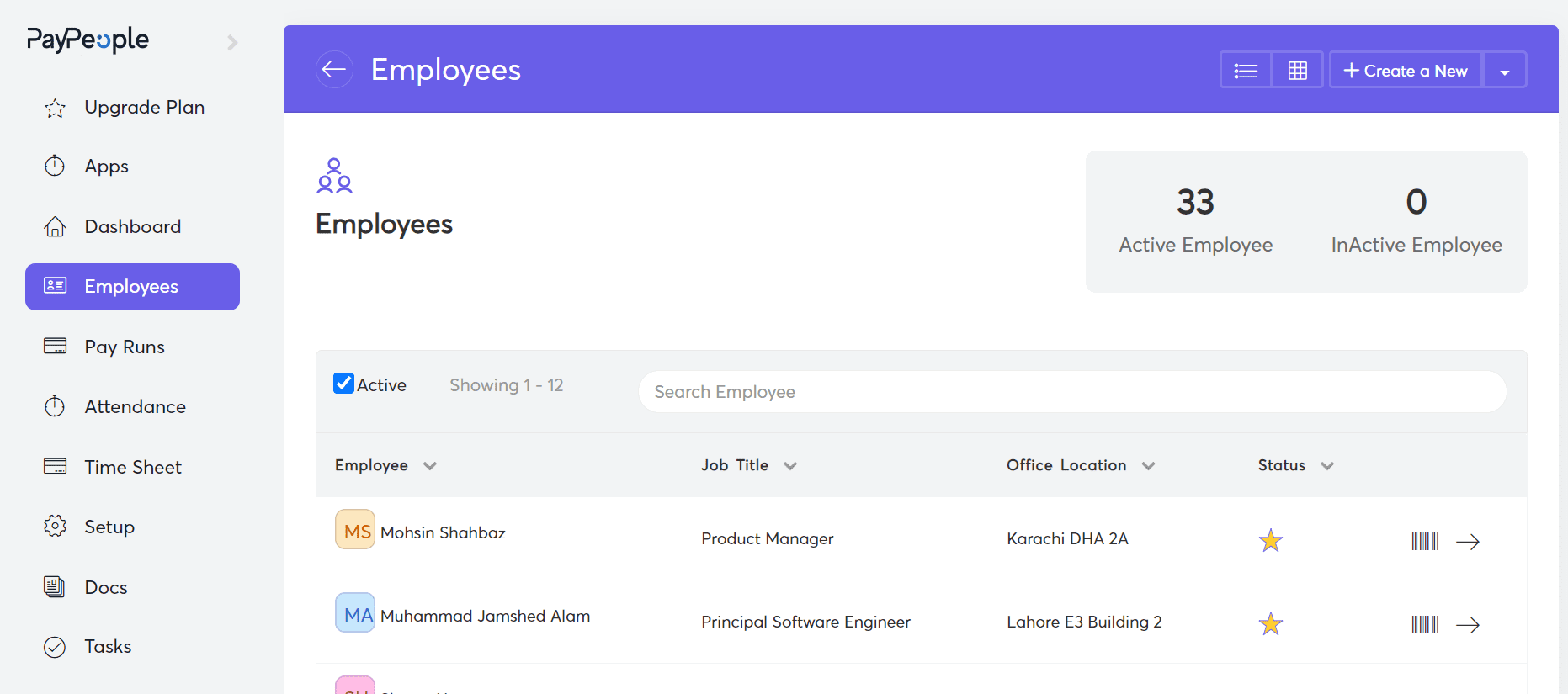

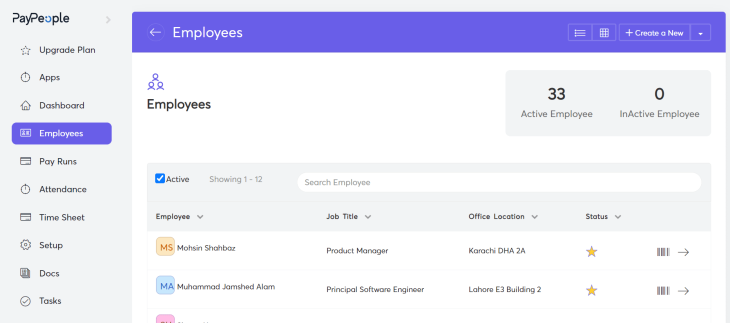
HR software in Pakistan implementation is the most critical step for HR managers looking to move away from chaotic spreadsheets and manual filing cabinets towards a structured, secure, and modern digital workplace. While many SMEs in Karachi, Lahore, and Islamabad fear the complexity of a digital transition, PayPeople simplifies the process by automating employee master data, document vaults, and approval workflows in a single cloud-based repository.
The core modules of a human resource system in Pakistan focus on centralizing employee information and streamlining daily interactions. For HR managers, the most essential component is the Employee Master Data module, which serves as the “single source of truth” for the entire organization.
This includes digital document vaults for CNIC copies, educational degrees, and employment contracts, ensuring that you are always ready for internal or external audits.
Beyond basic records, core HR software provides a dynamic Org Chart and Reporting Hierarchy. This visual tool helps managers in growing Pakistani firms understand department structures and reporting lines instantly. By integrating self-service portals, employees can update their own personal information, which reduces the administrative burden on the HR department and improves data accuracy across the board.
An Employee Self-Service (ESS) portal is a game-changer for people management in Pakistan. Instead of employees constantly visiting the HR office to ask about their leave balance or update their bank details, they can simply log into a mobile app or web portal.
In a typical 100-employee office in Faisalabad or Sialkot, this single feature can save the HR manager up to 10 hours a week in repetitive administrative queries.
The ESS portal empowers the workforce by giving them transparency. Employees can view their own profiles, download company policies, and interact with the human resource system without manual intervention. This culture of transparency leads to higher engagement levels, as staff feel they have direct control over their professional data and administrative needs, whether they are in the office or working remotely.
Automating approval workflows for leave requests, expense claims, and reimbursement is where HRMS software provides its fastest ROI. In manual systems, a leave form might sit on a manager’s desk for days; with automated workflows, the request is instantly routed to the correct supervisor’s dashboard.
Managers can approve or reject requests with one click, and the system automatically updates the employee’s record and leave balance.
These workflows are highly customizable to fit Pakistani business practices. You can set multi-level approvals where a request first goes to a line manager and then to the department head. This ensures that every expense claim or vacation request follows the company’s official policy without the HR manager having to chase signatures manually. The system also maintains a full audit trail of who approved what and when.
Data security is a top priority when implementing a human resource system in Pakistan, especially with increasing concerns about data privacy and corporate confidentiality. Modern cloud HRIS platforms use Role-Based Access Control (RBAC) to ensure that sensitive data is only visible to authorized personnel.
For example, a department head might see their team’s performance reviews but will be restricted from seeing their salary details or private documents.
PayPeople uses enterprise-grade encryption to protect your employee data in the cloud. Unlike local servers in an office that can be vulnerable to hardware failure or theft, cloud-based data is backed up across multiple secure geographic locations. This ensures that even in the event of local disruptions in Karachi or Lahore, your HR data remains accessible and safe, allowing for seamless business continuity.
SaaS pricing has made world-class HR technology accessible to Pakistani start-ups and established factories alike. Pricing is typically structured on a per-employee-per-month basis, allowing businesses to scale their costs as their headcount grows. This “pay-as-you-grow” model eliminates the need for heavy upfront capital investment in software licenses and server hardware.
| Module | Self-Service | Workflow Builder | Price (PKR/employee/month) |
|---|---|---|---|
| Core HR & Directory | Yes | Basic | Rs. 200 |
| Standard HRMS | Yes | Advanced | Rs. 400 |
| Enterprise HRIS | Yes | Customizable | Rs. 600 |
A standalone HR system is only half the solution; the real power lies in integrations with payroll and attendance . When your HR software is integrated, employee data flows naturally into the monthly salary calculation.
For instance, if an employee is marked on “Unpaid Leave” in the leave module, the system automatically deducts that day’s pay from the payroll without the HR manager needing to manually reconcile two different sheets.
This integration also extends to time-tracking. While this post focuses on core HR management, the ability to pull data from attendance logs into the core HR profile allows for a holistic view of employee performance and reliability. By centralizing these functions, Pakistani businesses can ensure that their data is consistent across all departments, leading to fewer errors in salary disbursements and compliance reporting.
Implementing HR software in Pakistan is no longer a luxury but a necessity for business efficiency. By centralizing employee records, automating approvals, and empowering staff through self-service, HR managers can finally focus on strategic talent development rather than manual data entry. Ready to transform your HR department? Book a demo with our local experts today.
The HR software in Pakistan provides a digital document vault where you can upload CNIC copies, degrees, and contracts. All employee master data is encrypted and organized in a searchable directory, making it easy for HR managers to access records instantly during audits or internal reviews.
Yes, the self-service portal is mobile-responsive and accessible via apps. Employees across Pakistan can use their smartphones to request leaves, view payslips, and update their personal profiles, which significantly reduces the workload on the central HR department for basic administrative tasks.
Absolutely. Our HR software in Pakistan allows you to build custom approval chains. You can set up workflows where leave or expense requests go from the employee to their manager and then to HR or Finance, ensuring full compliance with your internal company policies.
PayPeople uses Role-Based Access Control (RBAC). This means you can define exactly who sees what. While an HR manager might have full access, a department head might only see their own team’s data, ensuring maximum privacy and data security for your staff in Pakistan.
Most Pakistani SMEs can complete the core implementation of HR software in Pakistan within 10 to 15 days. This includes setting up your org chart, importing employee data from Excel, and configuring your basic leave and reimbursement policies before going live.
We offer dedicated local support via WhatsApp, email, and phone. Because we are built for Pakistan, our support team understands local HR challenges and provides hands-on training to ensure your HR managers and employees can use the system effectively from day one.