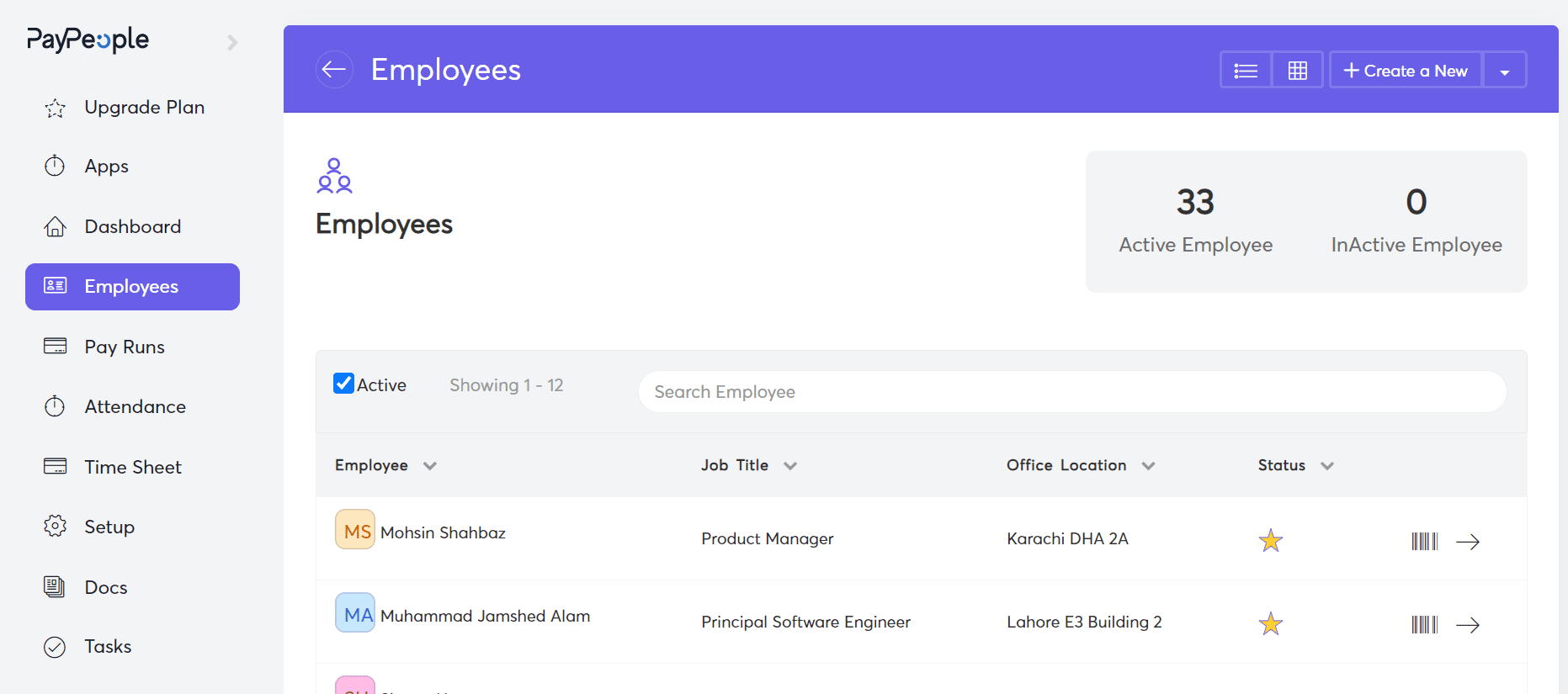

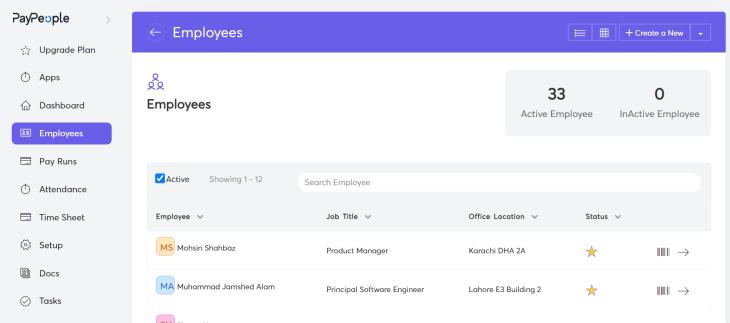
HR Software in Pakistan helps businesses across Lahore, Karachi, and Islamabad transform their operational productivity by digitizing manual people-management tasks into a unified cloud environment.
HR software in Pakistan boosts productivity by eliminating the administrative bottlenecks that slow down both employees and managers. By automating core HR functions like employee record-keeping, document management, and organizational hierarchy tracking, businesses reduce the time spent on “paper-pushing” by up to 40%. This allows HR leaders to focus on strategic growth rather than manual data entry.
In the Pakistani context, where companies often face challenges with decentralized data and manual branch coordination, a cloud-based HRMS provides a single source of truth. Whether your team is operating from a textile mill in Faisalabad or a head office in Karachi, real-time access to employee profiles and reports ensures that decisions are made based on accurate, live data rather than outdated spreadsheets.
A self-service portal is one of the most effective modules for increasing organizational efficiency in Pakistani SMEs. It empowers employees to manage their own personal data, download payslips, and view company policies without emailing HR. This “shift left” of data management significantly reduces the volume of repetitive queries hitting the HR department daily.
For managers, self-service means getting instant notifications for leave requests or expense claims on their mobile devices. Instead of waiting for physical files to move from desk to desk, approvals happen in seconds via automated workflows. This speed of action keeps the business moving and ensures that employees feel supported and heard in real-time.
Automated approval workflows replace the traditional, slow paper-trail system common in many local businesses. By defining clear reporting hierarchies within the HR software in Pakistan, every request—be it for a leave of absence, a reimbursement, or a document request—is automatically routed to the correct supervisor based on the company’s org chart.
These workflows include multi-level approvals and automated reminders, ensuring that no request gets buried in an inbox. For a business with multiple branches across Pakistan, this ensures policy consistency. Every department follows the same digitized SOPs, which minimizes errors and prevents the “favoritism” often associated with manual, non-transparent approval processes.
A central document vault within your HRMS ensures that sensitive employee records, from CNIC copies to educational transcripts and employment contracts, are stored securely in the cloud. Unlike physical filing cabinets that are prone to damage or unauthorized access, a digital vault uses role-based access control to ensure only authorized personnel can view specific files.
For audits and compliance, having a searchable repository is invaluable. Whether you are preparing for an ISO audit or a routine EOBI inspection, having all employee master data organized and exportable at the click of a button saves days of preparation. It also helps in maintaining data privacy standards, which is becoming increasingly critical for companies working with international clients.
A dynamic, auto-generated org chart provides much more than just a visual map of the company; it serves as the backbone of your HRIS. As new hires are added and promotions occur, the org chart updates in real-time, reflecting the current reporting lines.
This clarity is vital for large teams to understand who reports to whom and where specific expertise lies.
In Pakistan’s rapidly growing business sector, having a clear reporting structure helps in better resource allocation. It identifies gaps in the hierarchy and prevents “ghost employees” from staying on the roster. When integrated with performance and payroll, the org chart ensures that every employee’s output is aligned with the company’s broader operational goals.
| Module | Self-Service | Workflow Builder | Price (PKR/employee/month) |
|---|---|---|---|
| Core HR & Directory | Yes | Basic | Rs. 200 |
| Essential HRMS | Yes | Customizable | Rs. 400 |
| Professional Suite | Yes | Advanced | Rs. 600 |
Implementing the right human resource system is the fastest way to bridge the productivity gap in your workplace. By choosing PayPeople, you are investing in a cloud platform designed specifically for the unique operational needs of Pakistani businesses. Book a demo today to see how we can help your team work smarter.
SMEs in Pakistan adopt HR Software in Pakistan from PayPeople for three repeatable reasons: native EOBI / SESSI / PESSI and FBR-tax-slab handling, per-employee-per-month PKR billing that scales with headcount, and a Pakistan-based support team that answers in working hours. Most teams move off Excel or a legacy desktop HRMS once the monthly payroll run takes more than two working days, or once a multi-branch payroll consolidation becomes a source of reconciliation errors.
The most-used modules in Pakistan are payroll, biometric attendance and leave — these three together cover 80% of the day-to-day HR workload for a 50–250-employee SME. Recruitment, performance and expense modules are typically rolled out in a second phase 60–90 days after go-live, once managers are comfortable with self-service and approval workflows. PayPeople bills per-employee-per-month in PKR, starting around Rs. 400 for core HR + payroll, with volume discounts above 100 employees and custom enterprise pricing for multi-branch setups.
Compliance is the deal-decider. EOBI and SESSI/PESSI contribution rates are maintained centrally and pushed to every customer’s payroll run, so you don’t manually patch tax tables when the federal budget changes. FBR income-tax slabs for salaried employees update the same way. The full monthly return — EOBI form, SESSI/PESSI form, FBR salary withholding statement — is generated from one screen, signed off and archived in the audit trail. Multi-branch payroll consolidates into a single GL-coded export ready for the accounting team.
Getting started in Pakistan: book a 30-minute demo at paypeople.pk/book-a-demo, the team hands you a 7-day sandbox with sample employees and a pre-configured tax slab, and you run one parallel-payroll month against your existing process before cutover. Total go-live for a typical Pakistani SME is 2–4 weeks; multi-branch enterprise rollouts take 6–8 weeks. WhatsApp +92 300 0800498 or email sales@paypeople.pk to start.
HR software in Pakistan boosts productivity by automating repetitive tasks like record-keeping, leave tracking, and document management. This allows HR teams to move away from spreadsheets and focus on strategic workforce development, reducing administrative time by nearly 50% for most Pakistani SMEs.
Yes, PayPeople HR software in Pakistan features a comprehensive Employee Self-Service (ESS) portal. Employees can view their profiles, request leaves, and download documents via a web browser or mobile app, significantly reducing the daily query load on your HR staff.
Absolutely. Our HR software in Pakistan allows you to build custom multi-level approval workflows for leaves, expenses, and claims. You can define specific hierarchies so that requests are automatically routed to the right manager, ensuring transparency and faster response times.
Data security is our top priority. PayPeople uses bank-grade encryption and role-based access controls. This means you can specify exactly which managers can see sensitive information, ensuring that employee master data and private documents remain protected at all times.
Our cloud-based HR software in Pakistan includes a digital document vault. You can upload and store CNICs, appointment letters, and qualification certificates directly to each employee’s profile, making it easy to retrieve records for audits or compliance checks instantly.
PayPeople follows a transparent, per-employee-per-month pricing model starting from Rs. 400. This allow Pakistani businesses to scale their HR software costs exactly according to their headcount, making it an affordable solution for both small startups and large enterprises.