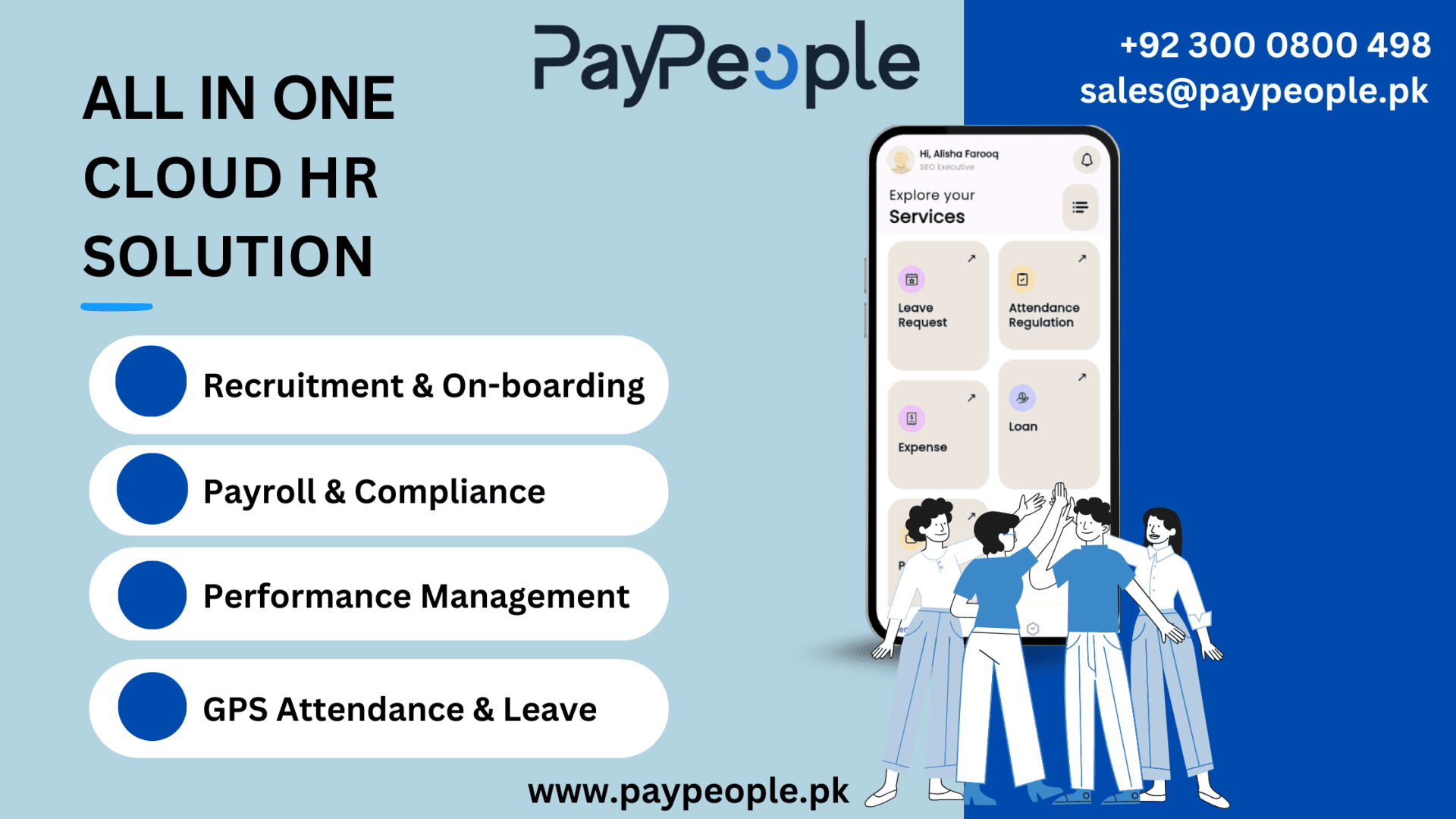
Selecting the ideal hr software remains a critical decision for PayPeople clients in Lahore.
In today’s fast-paced digital landscape, Human Resources (HR) software is critical for optimizing crucial tasks including payroll, recruitment, performance management, compliance, and employee engagement. With advances in AI-powered automation, cloud-based accessibility, and data security, choosing the right HR software is critical for increasing productivity, boosting staff management, and assuring compliance with changing labor standards. This guide examines the most recent HR software trends, their benefits, and how to select the best solution for your company.
Why Do Businesses Need HR Software?
Module
Self-Service
Workflow Builder
Price (PKR/employee/month)
Core HR & Directory
Yes (Mobile App)
Basic
Rs. 250
Leave & Expense
Yes (Portal)
Multi-Tier
Rs. 150
Performance Management
Yes (Feedback)
Standard
Rs. 200
Full HRMS Suite
Full Access
Advanced/Custom
Rs. 400
HR software automates and centralizes important HR activities, minimizing manual errors, increasing compliance, and improving the employee experience. A robust human resource solution ensures:
Automation of HR tasks: Eliminates repetitive manual work, increasing productivity.
Enhanced compliance: Keeps businesses aligned with changing labor laws and tax regulations.
Data security and privacy: Ensures sensitive employee information is protected.
Actionable insights through AI analytics: Provides data-driven workforce decisions.
Improved employee engagement: Self-service portals empower employees to manage their records and requests.
What should you know about ?
What should you know about latest trends in hr software for 2026?
With changing workplace dynamics, HR software solutions have improved tremendously. Here are some of the key trends influencing the HR technology landscape:
1. Artificial intelligence and automation in HR
Artificial Intelligence (AI) is transforming HR processes, from automated resume screening and chatbot-driven employee queries to predictive analytics in talent management. AI-powered HR software can identify skill gaps, forecast employee attrition, and personalize learning & development programs.
2. Cloud-Based HR Solutions for Remote Work
Cloud-based HR software is a game-changer for businesses with remote and hybrid workforces. It allows HR teams to manage payroll, track attendance, and oversee performance from anywhere. Cloud solutions are scalable, cost-effective, and enable seamless collaboration between HR and employees.
3. Employee experience and self-service portals
HR software is increasingly focusing on enhancing the work experience. Employees can use self-service portals to apply for leave, view payroll details, update personal information, and contact with HR professionals, resulting in increased engagement and reduced administrative workload.
4. Integrated Payroll and Compliance Management
Payroll Management, tax compliance, benefits administration, and time tracking are all integrated into modern human resource software. Automated tax computations, multi-country payroll processing, and real-time compliance updates make it easy for businesses to remain on top of regulatory needs.
5. Data-Driven HR and Advanced Analytics
HR analytics tools use real-time data to optimize workforce management, employee retention, and productivity. Predictive analytics help HR teams make strategic hiring and talent development decisions.
What should you know about types of hr software solutions?
Cloud-Based HR Software
Accessible from any location.
Scalable to accommodate increasing businesses.
Requires little IT infrastructure.
Ideal for small and medium-sized businesses.
On-Premise HR Software
Hosted on a company’s internal servers.
Offers greater control over data security.
Requires significant upfront investment.
Suitable for large enterprises with strict security policies.
What should you know about ?
Key Features to Consider When Choosing HR Software
When evaluating HR software, consider the following features to align with your company’s needs:
Payroll and Tax Management: Automated payroll processing, tax calculations, and compliance monitoring.
Recruitment & Onboarding: AI-powered job postings, applicant tracking, and digital Hiring & onboarding.
Compliance & Legal Support: Ensures adherence to labor laws and evolving tax regulations.
Employee Self-Service & Engagement: Access to HR services, digital payslips, and attendance tracking.
How to Choose Your Company’s Ideal HR Software
Your company’s size, financial constraints, and operational objectives must all be carefully taken into account when choosing an HR solution. Here are a few crucial elements to consider:
Scalability: Pick a system that can expand along with your company.
Cost-Effectiveness: Examine the short-term expenses and long-term advantages of cloud computing against on-premises options.
Integration Capabilities: Verify interoperability with current tools, such as project management software and accounting software.
User-Friendliness: Select software that is simple enough for employees and HR staff to use.
Customer Support: For system upgrades and troubleshooting, dependable vendor support is essential.
Conclusion
Selecting the appropriate HR software is crucial for increasing employee engagement, guaranteeing regulatory compliance, and optimizing HR processes. Businesses need to keep up with the most recent developments in HR technology to make wise judgments. The right HR software may revolutionize workforce management and boost overall efficiency, whether you choose a powerful on-premise system or an AI-powered cloud option.Paypeople provides AI-powered HRMS that streamlines workforce administration, payroll, and talent acquisition for companies seeking a comprehensive HR solution. Discover how Paypeople can transform your human resources operations right now!
Define Module Scope — Identify which core HR modules you need first, such as the digital employee directory or leave management. Starting with a phased approach helps with adoption.
Import Organizational Structure — Map out your reporting lines and import your current employee master data from Excel spreadsheets into the secure human resource system.
Configure Roles and Permissions — Set up role-based access to ensure that sensitive information like CNICs and salaries is only visible to the appropriate HR or finance personnel.
Design Approval Workflows — Build your logic for leave and expense approvals, ensuring requests are routed automatically to the correct department heads or directors.
Onboard and Train Employees — Launch the self-service mobile app to your staff and provide a short training session on how to submit requests and update personal information.
Frequently Asked Questions
How does HR software manage employee master data and documents?
HR software in Pakistan centralizes all employee records, including CNIC details, employment contracts, and history, in a secure cloud-based vault. This ensures data is digitized, encrypted, and easily accessible for audits, significantly reducing the physical paperwork typical in Pakistani offices.
What are the benefits of an employee self-service portal?
A Human Resource System (HRMS) provides a self-service portal where employees can view their own profiles, request leaves, and download documents. This reduces the burden on HR departments in Pakistan, as employees no longer need to call or email for basic information.
Can the software handle multi-level approval workflows for leaves?
A robust human resource system allows you to build custom approval tiers. For example, a leave request from a site office in Sialkot can be routed automatically to a manager in Lahore for instant digital approval, maintaining a strict reporting hierarchy.
Is employee data secure in a cloud-based HR system?
Yes, PayPeople provides role-based access control, meaning only authorized HR or management staff can see sensitive salary or personal data. This level of security is essential for businesses in Pakistan to comply with modern data privacy standards.
How does HR software integrate with payroll and attendance?
Modern HR software in Pakistan is designed to sync directly with attendance and payroll modules. This means once a leave is approved in the HR portal, it automatically adjusts the attendance record and calculates the correct salary, eliminating manual data entry.
How long does it take to roll out an HRMS in Pakistan?
The implementation of HR software in a Pakistani SME usually takes 2 to 4 weeks. This includes setting up the org chart, importing existing data from Excel, and training your managers on the new self-service workflows.