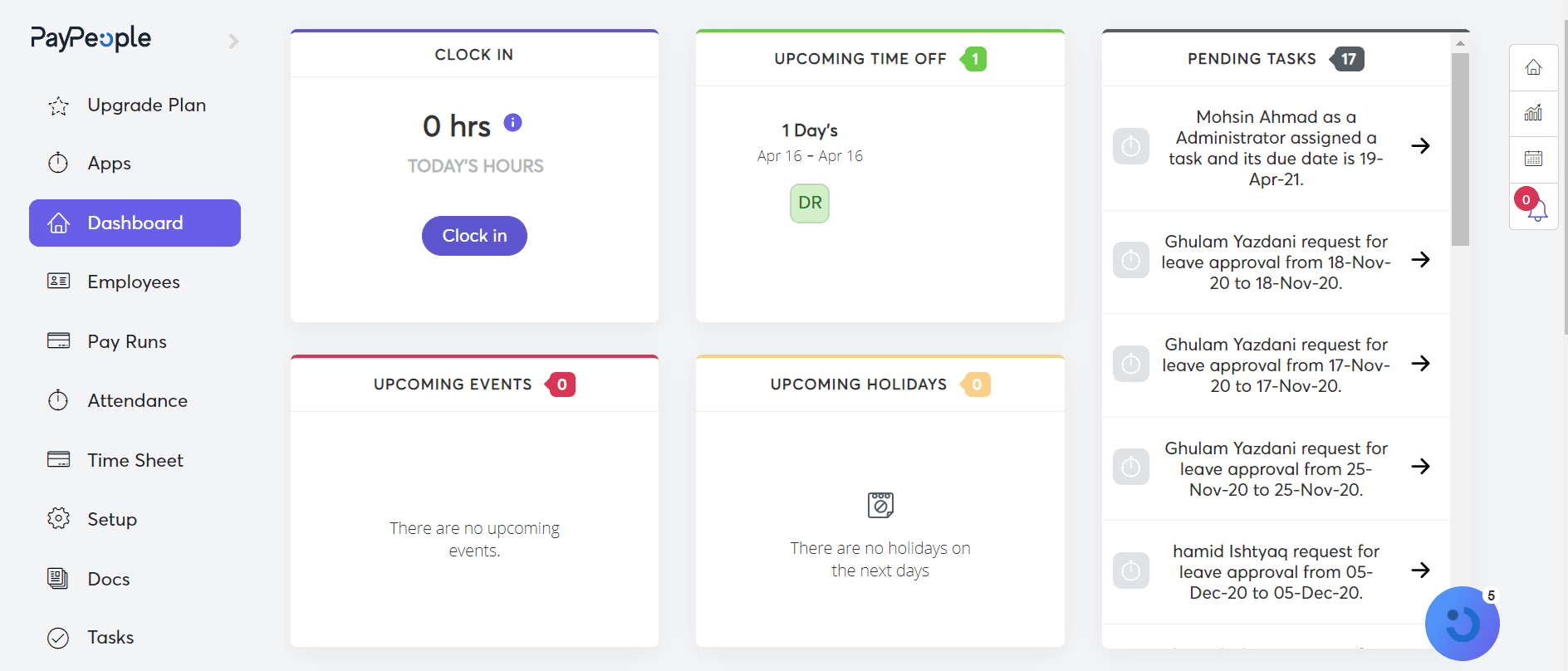

HR software in Pakistan is becoming a strategic necessity for SMEs looking to scale while maintaining a secure, organized employee document vault and automated approval workflows. Whether you are a growing startup in Karachi or an established manufacturing firm in Lahore, transitioning from manual spreadsheets to a centralized HRIS protects your data and empowers your workforce through self-service portals.
Most businesses in Pakistan start considering an HRMS once they reach 20 to 30 employees, as manual tracking of leave, documents, and reporting structures becomes prone to error.
However, the best time is actually before you feel the administrative burden, as having a clean employee master data set from day one ensures that your organizational hierarchy and reporting lines are transparent as you scale.
In Pakistan, many companies still rely on physical filing cabinets or shared Excel sheets, which pose significant risks to employee privacy and data integrity. Modern HR software provides a secure, role-based access environment where sensitive information like CNIC copies, employment contracts, and salary details are encrypted and only accessible to authorized personnel, ensuring compliance with evolving data protection norms.
A standard HR software implementation typically begins with Core HR, which includes the employee master database, document vault, and organizational charts. Following this, businesses often roll out leave management, expense claims, and performance appraisal modules. This phased approach allows employees in Islamabad or Faisalabad to get comfortable with the self-service portal before moving to complex performance KPI tracking.
Yes, professional HR software in Pakistan is designed to streamline approval workflows for leave and expenses without requiring manual signatures. When an employee submits a leave request via the mobile app, the system automatically routes it to their manager based on the pre-configured reporting hierarchy. These automated workflows reduce turnaround time and improve employee satisfaction across multi-location branches.
The introduction of a Self-Service Portal (ESS) shifts the administrative burden away from HR managers by allowing staff to update their personal details, view company policies, and download documents independently.
In the Pakistani tech and retail sectors, this autonomy is highly valued by younger employees who prefer managing their work-life balance through a digital interface rather than chasing HR for basic information.
Pricing for cloud HRMS in Pakistan is typically structured on a per-employee-per-month basis, making it highly affordable for SMEs. This subscription model ensures you only pay for the active users on your system while receiving continuous updates and local support.
Most teams find that the time saved on manual data entry pays for the software license within the first three months of implementation.
| Module | Self-Service | Workflow Builder | Price (PKR/employee/month) |
|---|---|---|---|
| Core HR & Directory | Yes | Basic | Rs. 200 – 300 |
| Leave & Expense | Yes | Advanced | Rs. 350 – 450 |
| Full HRMS Suite | Yes | Full Custom | Rs. 500 – 700 |
Implementing HR software in Pakistan is the first step toward digitizing your business operations and building a professional corporate culture. By centralizing your people management, you free up your team to focus on growth rather than paperwork. Book a demo today to see how PayPeople can automate your HR workflows.
SMEs in Pakistan System adopt HR Software in Pakistan from PayPeople for three repeatable reasons: native EOBI / SESSI / PESSI and FBR-tax-slab handling, per-employee-per-month PKR billing that scales with headcount, and a Pakistan-based support team that answers in working hours. Most teams move off Excel or a legacy desktop HRMS once the monthly payroll run takes more than two working days, or once a multi-branch payroll consolidation becomes a source of reconciliation errors.
The most-used modules in Pakistan System are payroll, biometric attendance and leave — these three together cover 80% of the day-to-day HR workload for a 50–250-employee SME. Recruitment, performance and expense modules are typically rolled out in a second phase 60–90 days after go-live, once managers are comfortable with self-service and approval workflows. PayPeople bills per-employee-per-month in PKR, starting around Rs. 400 for core HR + payroll, with volume discounts above 100 employees and custom enterprise pricing for multi-branch setups.
Compliance is the deal-decider. EOBI and SESSI/PESSI contribution rates are maintained centrally and pushed to every customer’s payroll run, so you don’t manually patch tax tables when the federal budget changes. FBR income-tax slabs for salaried employees update the same way. The full monthly return — EOBI form, SESSI/PESSI form, FBR salary withholding statement — is generated from one screen, signed off and archived in the audit trail. Multi-branch payroll consolidates into a single GL-coded export ready for the accounting team.
Getting started in Pakistan System: book a 30-minute demo at paypeople.pk/book-a-demo, the team hands you a 7-day sandbox with sample employees and a pre-configured tax slab, and you run one parallel-payroll month against your existing process before cutover. Total go-live for a typical Pakistani SME is 2–4 weeks; multi-branch enterprise rollouts take 6–8 weeks. WhatsApp +92 300 0800498 or email sales@paypeople.pk to start.
The best time for an HR software in Pakistan rollout is when you hit 20+ employees. At this stage, tracking leave, CNICs, and contracts in Excel becomes risky. Implementing early ensures your employee master data is clean and your reporting hierarchy is structured for growth.
Yes, modern HR software in Pakistan features a document vault where you can securely store CNIC copies, degrees, and employment contracts. This centralizes employee data and replaces the traditional, insecure filing cabinets used in many local offices.
Self-service portals allow employees to view their own profiles, request leaves, and upload expense claims via mobile or web. For HR software in Pakistan, this reduces 60% of manual HR tasks by giving power back to the workers.
Absolutely. A professional HRMS allows you to define different levels of access. For example, a department head in Lahore can see their team’s data, while the CFO sees company-wide reports, ensuring high data security across your organization.
Most cloud HR software in Pakistan offers PKR pricing ranging from Rs. 400 to Rs. 800 per employee monthly. This model is perfect for SMEs as it allows them to scale their costs exactly as they hire new staff.
Most Pakistani companies can go live with basic HR modules like employee directory and leave management within 7 to 10 days, depending on how quickly your current Excel data can be cleaned and imported.