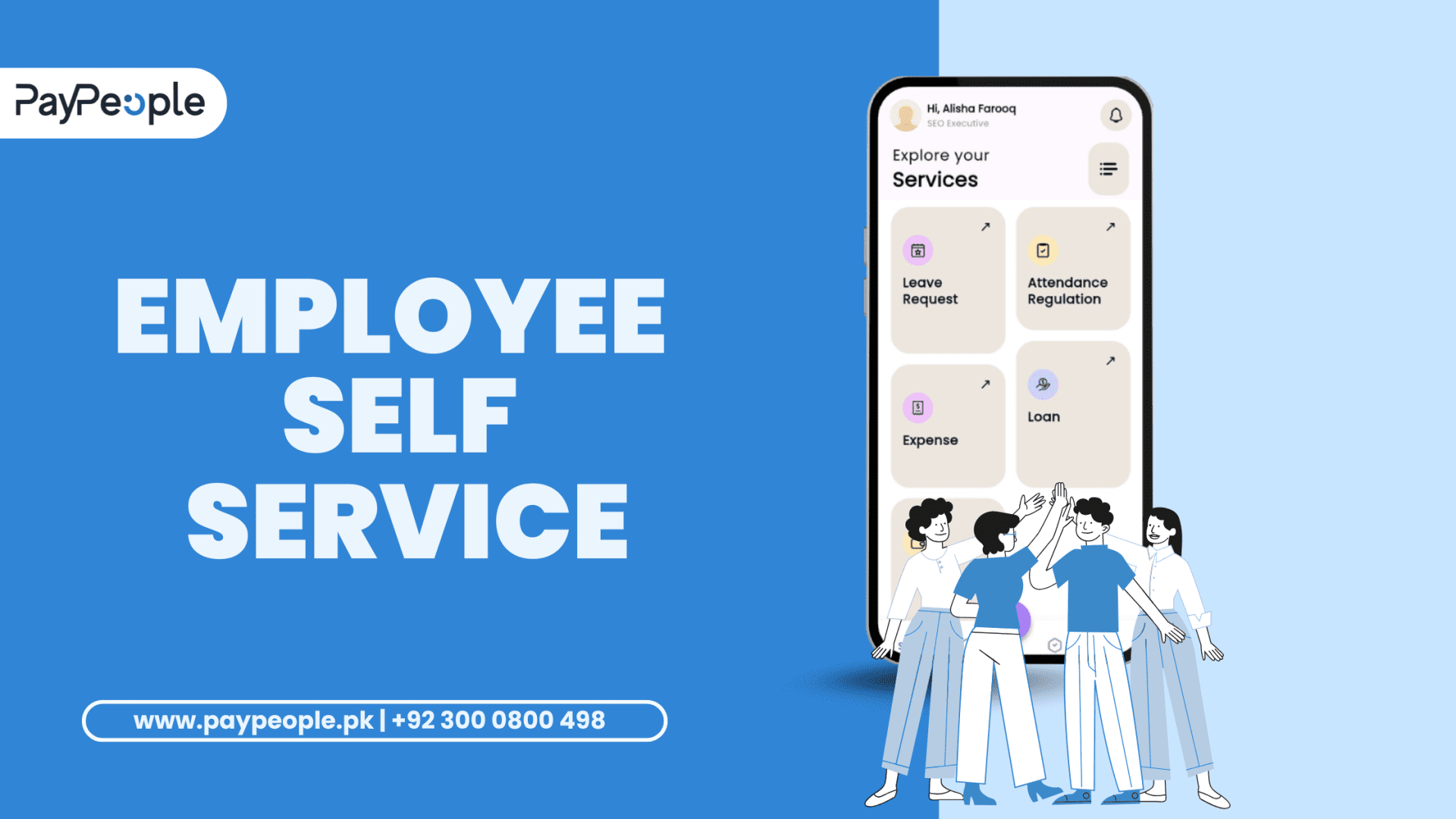

In today’s fast-paced digital work environment, businesses are constantly searching for tools that streamline operations, enhance employee satisfaction, and reduce administrative overhead. One such transformative innovation is the Employee Self-Service (ESS) portal—a modern solution designed to put essential HR functions directly into the hands of employees. The concept of ESS is no longer a luxury but a necessity, especially for businesses in Pakistan navigating remote work, compliance complexities, and workforce engagement challenges.
As workforce expectations evolve, the demand for transparency, autonomy, and real-time access to personal and organizational data has become a key priority. The traditional HR model—reliant on manual interventions and email-based requests—is no longer viable for growing enterprises. In contrast, ESS portals offer smarter HR access, enabling employees to manage their own information with minimal dependency on HR personnel.
This article explores how a robust Employee Self-Service Portal, such as the one offered by PayPeople, empowers businesses in Pakistan with smarter, faster, and more efficient HR access.
| Module | Self-Service | Workflow Builder | Price (PKR/employee/month) |
|---|---|---|---|
| Core HR & Profile | Yes (Mobile & Web) | Basic | Rs. 200 |
| Leave & Attendance | Yes (Real-time) | Multi-level | Rs. 350 |
| Expense & Claims | Yes (Receipt Upload) | Custom Rules | Rs. 450 |
| Full HRMS Suite | Full Access | Advanced | Rs. 600 |
An Employee Self-Service Portal is a secure digital platform that allows employees to access and manage various HR-related services on their own. These services typically include:
Access to personal records and employment details
Viewing and downloading payslips and tax documents
Submitting and tracking leave requests
Viewing attendance and shift schedules
Managing benefits, claims, and reimbursements
Updating personal and bank information
Engaging with performance reviews and feedback
By decentralizing HR access, these portals give employees greater control over their information while relieving HR teams of repetitive administrative tasks.
For organizations to remain competitive, efficient access to information is critical. Delays in retrieving payroll data, applying for leaves, or accessing employment letters can lead to frustration, decreased morale, and lower productivity. Smart HR access—enabled by ESS portals—helps address these inefficiencies in several key ways:
Time Savings: Employees no longer need to wait for HR responses or approvals for routine tasks. Real-time access cuts down processing times significantly.
Data Accuracy: When employees manage and update their records, there is a reduced likelihood of errors, ensuring cleaner and more accurate HR databases.
Increased Transparency: ESS portals make it easy to track leaves, attendance, and salary transactions, which enhances trust in the organization’s HR processes.
Boosted Employee Engagement: Giving employees more control over their HR-related needs signals trust and empowerment, leading to increased satisfaction and engagement.
Modern ESS platforms are not just repositories of information—they are interactive, intuitive systems designed to enhance the employee experience. Some of the most impactful features include:
Mobile Accessibility: The ability to log in from any device at any time ensures flexibility for remote or field-based employees.
Integrated Notifications: Automated alerts for leave approvals, document uploads, and policy updates keep employees informed without HR intervention.
Self-Onboarding Tools: New hires can complete onboarding formalities, upload documents, and access orientation material from within the portal.
Document Management: Employees can access offer letters, contracts, and tax forms without needing to email HR.
Feedback Mechanism: Two-way communication features allow employees to give feedback, raise queries, or respond to performance reviews.
PayPeople, one of Pakistan’s leading HR software providers, offers an advanced Employee Self-Service Portal tailored for businesses of all sizes. The solution is designed to align with local compliance standards, cultural expectations, and organizational structures commonly found across Pakistani enterprises.
With PayPeople’s ESS portal, businesses can ensure a seamless flow of information between HR and employees while maintaining a high level of data security and operational efficiency.
Localized Functionality:
PayPeople understands the unique challenges faced by businesses in Pakistan, such as compliance with local labor laws, tax regulations, and employee preferences. The ESS portal reflects this understanding by offering features that support the Urdu or any local language, local calendar systems, and region-specific workflows.
Seamless Integration:
The ESS portal integrates with PayPeople’s broader HRMS modules, including Payroll, Attendance, Performance Management, and Recruitment. This ensures a unified experience for employees and eliminates data silos.
Automated Workflows:
From leave approvals to document generation, PayPeople automates repetitive HR tasks. For example, when an employee submits a leave request, the system automatically routes it to the appropriate manager and updates the leave balance upon approval.
Security and Data Privacy:
With robust encryption and role-based access controls, PayPeople ensures that sensitive employee information remains confidential and is only accessible to authorized personnel.
Scalability for Growth:
Whether it is a startup or a large enterprise, PayPeople’s ESS portal scales with business growth, accommodating new employees, departments, and workflow complexities without disruption.
For HR Teams:
Reduces administrative workload, allows focus on strategic initiatives, and ensures faster policy implementation.
For Employees:
Provides autonomy, builds trust, and increases engagement by offering a user-friendly interface for daily HR needs.
For Employers:
Enhances operational efficiency, reduces overhead costs, and creates a transparent work environment that attracts and retains talent.
Consider a mid-sized IT firm in Lahore with over 200 employees. Before implementing PayPeople’s ESS portal, HR staff were spending up to 40% of their time responding to repetitive queries related to payslips, leave balances, and attendance corrections. Employees often experienced delays in approvals and faced confusion due to a lack of transparency.
After adopting PayPeople’s ESS solution, employees were able to submit requests, access payslips, and track attendance in real-time. HR staff reported a 60% reduction in routine workload, while overall employee satisfaction scores improved by 30% in internal surveys. This allowed the HR department to shift focus towards talent development and strategic planning.
Some businesses hesitate to implement ESS portals due to concerns about training, cost, or resistance to change. However, PayPeople addresses these concerns effectively:
User-Friendly Interface: Minimal training required
Affordable Pricing Plans: Scalable for SMEs and large enterprises
Support and Onboarding: Dedicated support teams ensure a smooth transition
Customizable Modules: Businesses can implement features gradually based on their needs
As digital transformation continues to redefine business processes in Pakistan, the adoption of ESS portals will only accelerate. Forward-thinking organizations are investing in HR technology not just for automation, but for improving employee experience and organizational agility.
With cloud-based accessibility, AI-driven insights, and smart integrations, the future of ESS is dynamic and employee-centric. Businesses that adopt these tools early will enjoy a competitive advantage in workforce efficiency and talent retention.
The shift towards smarter HR access is not merely a trend—it is a strategic imperative. An Employee Self-Service Portal is more than just a convenience; it is a reflection of how much a company values transparency, trust, and empowerment.
With PayPeople’s ESS portal, businesses in Pakistan can elevate their HR operations, streamline communication, and foster a workplace where employees feel informed, independent, and valued. Whether it is automating leave requests, managing payroll visibility, or supporting remote work, PayPeople delivers a comprehensive self-service experience that adapts to your organization’s evolving needs.
Now is the time to move from outdated HR practices to smarter, more responsive systems. By adopting an employee self-service portal, your business not only saves time but also builds a culture of efficiency and employee empowerment.
You can explore our other blogs, like:
An Employee Self-Service (ESS) portal allows your staff to view payslips, apply for leaves, and update personal info without emailing HR. In Pakistan, this helps companies save hours of administrative work and ensures employees have 24/7 access to their employment records via mobile or web.
Yes, PayPeople provides role-based access and data security. Employees only see their own data, while managers see team details. All communication is encrypted, keeping your confidential HR records safe from unauthorized access within the human resource system.
Through the Employee Self-Service portal, staff can submit leave requests, expense claims, and reimbursement forms. These are automatically routed through customized approval workflows to the relevant manager, ensuring faster processing and better transparency in your Pakistan-based office.
Absolutely. PayPeople’s Employee Self-Service portal is fully mobile-responsive and available as an app. This allows field staff and remote workers across Pakistan to mark attendance, check schedules, and upload documents while on the move.
Implementation for a mid-sized Pakistani SME usually takes 1 to 2 weeks. This includes importing your org chart, setting up reporting hierarchies, and onboarding employees. PayPeople provides a guided process to ensure a smooth transition from Excel to cloud HR software.
Yes, our Employee Self-Service includes a secure document vault. Staff can download their digital payslips, tax certificates (149 forms), and company policies anytime, reducing the workload on your payroll and HR departments.