
Attendance devices in Pakistan are transforming how businesses in cities like Karachi, Lahore, and Islamabad manage their workforce by eliminating manual errors and buddy punching. For modern Pakistani organizations, these biometric systems serve as the critical bridge between physical security and automated HR management, ensuring every work hour is tracked with 100% precision.
Implementing biometric attendance devices in Pakistan allows businesses to secure their premises while automating time-tracking for employees. By using unique physical traits like fingerprints or facial recognition, companies across Punjab, Sindh, and Khyber Pakhtunkhwa can prevent time theft, which often accounts for 5-10% of payroll leakage in manual systems. This accuracy ensures that staff are paid exactly for the hours they contribute.
Beyond simple clock-ins, these devices integrate seamlessly with cloud platforms to provide real-time visibility. HR managers in busy industrial hubs like Faisalabad or Sialkot can monitor attendance across multiple factory branches from a single dashboard, receiving alerts for late arrivals or unauthorized absences instantly without waiting for monthly CSV exports.
Choosing the right hardware is essential for reliability, especially in environments with varying temperatures or high dust levels. Leading brands like ZKTeco, Hikvision, and Suprema dominate the market in Pakistan because they offer robust sensors that handle the specific challenges of local work environments, such as worn fingerprints in manufacturing sectors.
PayPeople supports a wide range of these devices, including the popular ZKTeco K40, uFace series, and MB series. These devices are favored by Pakistani SMEs for their durability and ease of connectivity via LAN or Wi-Fi. Our software acts as the intelligence layer, pulling data automatically from these machines to calculate rosters, shifts, and overtime without human intervention.
For companies with sales teams in Rawalpindi or delivery fleets in Multan, hardware devices aren’t always feasible. This is where mobile attendance with geo-fencing adds immense value. By setting a virtual perimeter around a client’s office or a project site, employees can “clock in” using the PayPeople mobile app only when they are physically present at the designated location.
This hybrid approach—using physical biometric devices at the head office and geo-fenced mobile check-ins for field staff—provides a comprehensive view of the entire workforce. For Pakistani NGOs and logistics firms, this ensures transparency in field operations while keeping the attendance data centralized for monthly payroll processing.
Many Pakistani industries, particularly healthcare and manufacturing, operate on 24/7 cycles with complex rosters. Modern attendance devices in Pakistan, when paired with PayPeople, can handle multi-shift rotations, night shift allowances, and break-time tracking. The system automatically identifies which shift an employee has reported for based on their clock-in time.
This automation is vital for maintaining compliance and employee morale. When a worker in a textile mill in Gadoon works an extra four hours, the biometric log confirms the overtime, and the system applies the correct multiplier (e.g., 2x for public holidays) automatically. This reduces disputes between labor and management regarding wage calculations.
The total cost of ownership consists of the one-time hardware purchase and a recurring software subscription. In Pakistan, high-quality biometric devices range from Rs. 15,000 to Rs. 85,000 depending on features like facial recognition or battery backup. Software like PayPeople offers affordable per-employee pricing that makes enterprise-grade tech accessible to small businesses.
Investment in these systems typically pays for itself within 3-6 months. By reducing manual data entry time for HR and eliminating “buddy punching” (where one employee clocks in for another), businesses save significant sums on their monthly labor costs. It’s an investment in operational discipline that scales as your business grows from 10 to 10,000 employees.
| Device Type | Capacity | Sync Frequency | Monthly Cost (PKR) |
|---|---|---|---|
| Fingerprint Only (K40/K20) | 1,000 – 3,000 Users | Real-time / Push | Rs. 400/emp |
| Face + Fingerprint (uFace) | 3,000 – 10,000 Users | Real-time / Push | Rs. 500/emp |
| Mobile Geo-fencing App | Unlimited | Instant GPS Sync | Rs. 350/emp |
| Enterprise Multi-Site | 100,000+ Users | Batch Auto-Sync | Contact Sales |
Automating your workforce starts with reliable attendance devices in Pakistan. By streamlining time-tracking and integrating it with your payroll, you save time and ensure total accuracy. Book a demo today to see how PayPeople transforms your attendance management.
SMEs in Pakistan Does Time Amp Add Value adopt Attendance Devices in Pakistan from PayPeople for three repeatable reasons: native EOBI / SESSI / PESSI and FBR-tax-slab handling, per-employee-per-month PKR billing that scales with headcount, and a Pakistan-based support team that answers in working hours. Most teams move off Excel or a legacy desktop HRMS once the monthly payroll run takes more than two working days, or once a multi-branch payroll consolidation becomes a source of reconciliation errors.
The most-used modules in Pakistan Does Time Amp Add Value are payroll, biometric attendance and leave — these three together cover 80% of the day-to-day HR workload for a 50–250-employee SME. Recruitment, performance and expense modules are typically rolled out in a second phase 60–90 days after go-live, once managers are comfortable with self-service and approval workflows. PayPeople bills per-employee-per-month in PKR, starting around Rs. 400 for core HR + payroll, with volume discounts above 100 employees and custom enterprise pricing for multi-branch setups.
Compliance is the deal-decider. EOBI and SESSI/PESSI contribution rates are maintained centrally and pushed to every customer’s payroll run, so you don’t manually patch tax tables when the federal budget changes. FBR income-tax slabs for salaried employees update the same way. The full monthly return — EOBI form, SESSI/PESSI form, FBR salary withholding statement — is generated from one screen, signed off and archived in the audit trail. Multi-branch payroll consolidates into a single GL-coded export ready for the accounting team.
Getting started in Pakistan Does Time Amp Add Value: book a 30-minute demo at paypeople.pk/book-a-demo, the team hands you a 7-day sandbox with sample employees and a pre-configured tax slab, and you run one parallel-payroll month against your existing process before cutover. Total go-live for a typical Pakistani SME is 2–4 weeks; multi-branch enterprise rollouts take 6–8 weeks. WhatsApp +92 300 0800498 or email sales@paypeople.pk to start.
Most Pakistani businesses use ZKTeco, Hikvision, or Suprema. PayPeople integrates with these attendance devices in Pakistan via a cloud-connect utility, allowing fingerprint and facial recognition data to flow directly into your payroll dashboard for instant salary calculation without manual Excel uploads.
Yes, PayPeople provides a mobile app with geo-fencing for field staff. You can define specific GPS coordinates for project sites or client offices across Pakistan. Employees can only clock in when they are within the designated radius, ensuring accountability for remote workers.
PayPeople supports unlimited shift rosters, including rotating shifts and night duties common in Pakistani hospitals and factories. The software automatically detects the shift based on the clock-in time from the attendance devices in Pakistan and applies relevant late-coming or overtime rules.
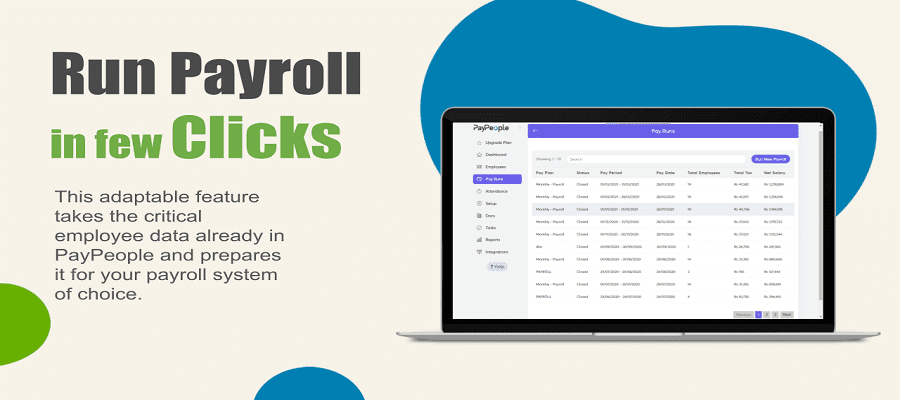
The biometric data from attendance devices in Pakistan is synced to the PayPeople cloud. The system then automatically calculates worked hours, deducts unpaid leaves or late minutes, and adds overtime pay based on your company policy, generating 100% accurate payslips in minutes.
Modern attendance devices in Pakistan often include internal battery backups (UPS). Additionally, PayPeople devices can store thousands of transactions offline; once power or internet is restored, the device automatically pushes the stored logs to the cloud, ensuring no attendance data is ever lost.
Yes, PayPeople is designed for multi-branch organizations. You can install different attendance devices in Pakistan at each branch (e.g., Karachi, Lahore, and Quetta) and monitor all logs from one centralized head-office account, making it ideal for retail chains and banks.