
In the dynamic and rapidly evolving world of human resource management, a Performance Management System (PMS) has become an indispensable tool for modern organisations. As businesses strive for higher productivity, better employee engagement, and strategic alignment, PMS platforms offer structured solutions to track, evaluate, and enhance employee performance.
The demand for data-driven performance evaluation tools has surged, particularly with the growing integration of artificial intelligence in workplace operations.
For companies aiming to gain a competitive edge, adopting a sophisticated PMS is no longer optional—it is a strategic necessity. Solutions like PayPeople, a comprehensive HR software platform, are empowering businesses to adopt AI-powered performance management for precise goal-setting, seamless reviews, and continuous feedback.
| Cycle | Method | Weight | Outcome |
|---|---|---|---|
| Annual Review | Top-Down KPI Evaluation | 70% Goals / 30% Competencies | Annual Salary Increment |
| Quarterly Check-in | OKR Tracking & Feedback | Milestone Based | Performance Correction & Bonus |
| 360-Degree | Multi-Rater Feedback | Qualitative Behavior | Leadership Development & Training |
| Mid-Year Review | Self & Manager Assessment | Progress Against Goals | PIP or Promotion Readiness |
A Performance Management System is a structured software solution that facilitates the monitoring, assessment, and improvement of employee performance within an organisation. Unlike traditional annual reviews, a PMS supports continuous evaluation, goal alignment, and ongoing feedback.
At its core, a PMS helps organisations ensure that every employee’s efforts are aligned with broader business objectives. Through features like key performance indicators (KPIs), real-time tracking, and performance metrics, it enables managers and HR professionals to make informed decisions. The ultimate purpose of a PMS is to cultivate a high-performing workforce that contributes to organisational growth while fostering a culture of accountability, recognition, and development.
Modern performance management systems have evolved to offer a range of intelligent and adaptive features. These capabilities help HR departments and managers stay agile and responsive to workforce dynamics.
A robust PMS allows for the creation of SMART goals that are measurable, achievable, and aligned with organisational objectives. This ensures every team member is working towards a shared vision.
Instead of waiting for annual reviews, performance can be monitored continuously. This provides an accurate picture of progress and helps identify issues early.
Employees receive feedback from peers, managers, and subordinates, offering a holistic view of their performance. This multi-source approach enhances fairness and reduces biases.
Self-evaluation empowers employees to reflect on their own progress, while manager reviews offer critical insight and direction for future improvement.
Artificial intelligence analyses employee data to provide actionable insights, identify trends, and suggest improvements. This predictive capacity makes the system more proactive than reactive.
A PMS that seamlessly integrates with existing HR tools—such as payroll, attendance, or leave management—streamlines operations and eliminates redundant data entry.
Adopting a performance management system presents numerous organisational benefits, ranging from increased productivity to enhanced employee engagement.
When performance is tracked consistently and goals are communicated, employees are more likely to remain focused and deliver optimal results.
A structured PMS reduces ambiguity in performance assessments. Clear metrics and documentation foster fairness and build trust among employees.
With systematic goal-setting features, employees are more aware of what is expected of them, reducing confusion and enhancing motivation.
By incorporating data from various sources and using objective metrics, PMS platforms help eliminate subjectivity from performance evaluations.
Frequent feedback allows employees to course-correct in real-time, leading to better outcomes and continuous development.
When employees feel acknowledged and supported through regular feedback and development plans, their job satisfaction and loyalty significantly improve.
Artificial Intelligence has introduced a paradigm shift in how performance management is approached in the digital era.
AI-powered tools can forecast employee performance based on historical data, enabling proactive intervention for underperformance or recognition of excellence.
AI algorithms analyze employee behavior and output to deliver personalized coaching and development suggestions tailored to individual strengths and areas for growth.
Administrative tasks such as scheduling reviews, sending reminders, and compiling performance reports are automated, allowing HR teams to focus on strategic initiatives.
With intelligent analytics, organizations can identify employees with leadership potential or those at risk of disengagement or turnover, allowing for timely action.
The integration of AI encourages the use of real-time, data-based insights rather than relying on subjective impressions or delayed feedback.

Numerous industries across Pakistan and beyond have embraced AI-powered performance management systems to improve operational efficiency.
In the IT sector, companies use PMS tools to manage rapidly growing teams and ensure performance targets are met across agile workflows. Banks benefit from transparent evaluation mechanisms, reducing compliance risk. In the manufacturing sector, PMS helps track shift-based employee performance and aligns production targets with workforce planning.
PayPeople offers a next-generation Performance Management System designed to meet the evolving needs of businesses in 2025 and beyond. It combines intelligent design with user-centric functionality to deliver an unparalleled HR experience.
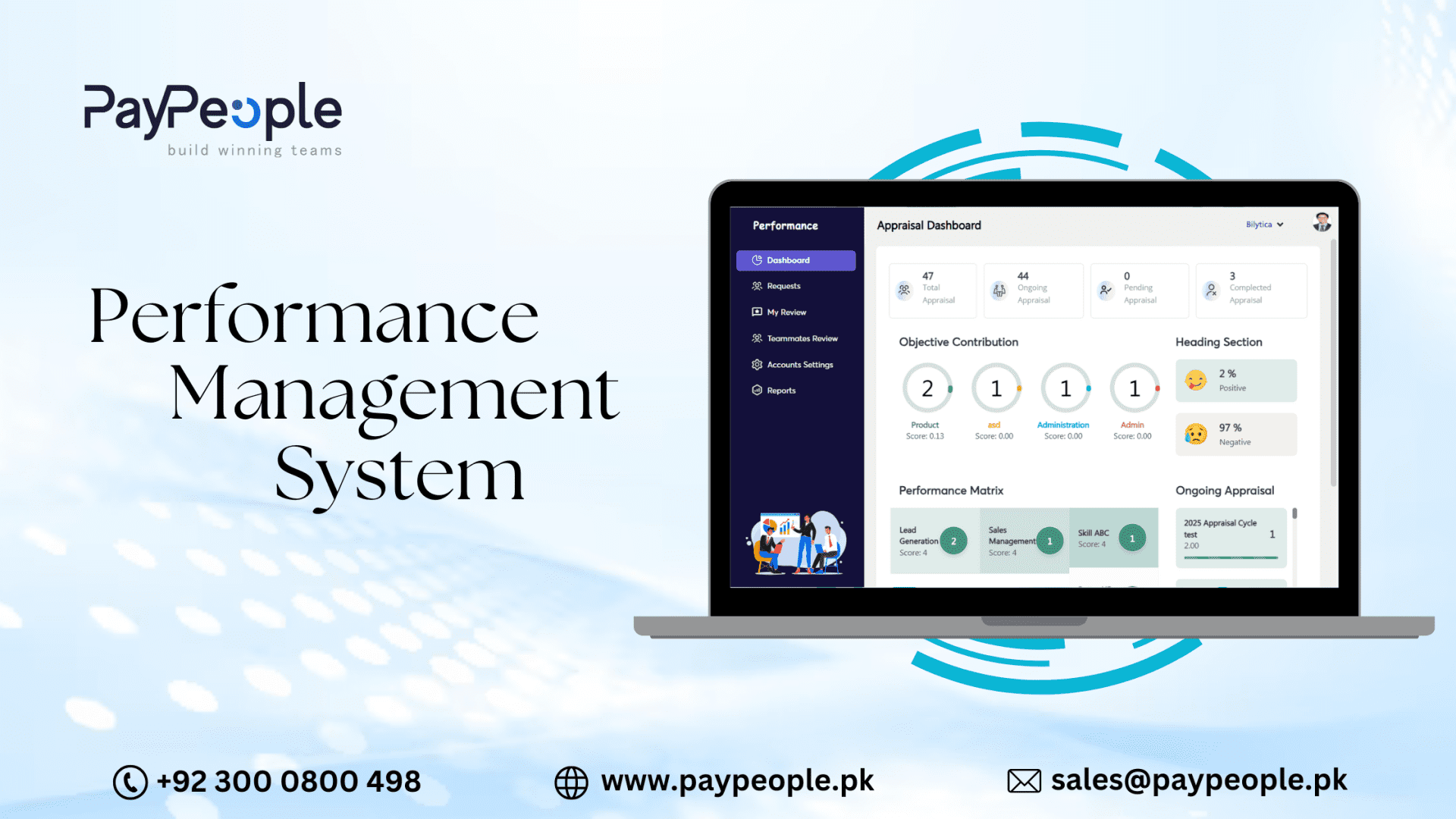
Real-Time Performance Dashboards: Gain immediate insight into individual and team performance.
AI-Powered Feedback Mechanisms: Receive predictive performance suggestions and coaching tips.
Integration with Payroll and HR Modules: Sync performance outcomes with promotions, bonuses, and compensation.
User-Friendly Interface: Both HR teams and employees benefit from an intuitive platform that simplifies evaluations, feedback, and goal tracking.
PayPeople’s solution is especially valuable for organizations seeking seamless collaboration between different HR processes, supported by AI analytics for accurate decision-making.
In today’s fast-paced corporate environment, investing in an intelligent Performance Management System is critical to ensuring long-term success. From real-time feedback to predictive analytics, PMS platforms offer a comprehensive solution to align employee potential with business objectives.
As workforce expectations evolve and businesses strive for continuous improvement, tools like PayPeople’s PMS empower organizations to remain competitive, motivated, and goal-oriented.
You can also read our other blogs like:
Schedule a demo with PayPeople today and experience the future of performance management.

A Performance Management System helps organizations in Pakistan automate goal setting, track employee KPIs in real-time, and conduct fair appraisals. By using a cloud-based PMS like PayPeople, HR managers can ensure that evaluations are based on data rather than subjective bias, leading to higher employee retention and productivity.
Commonly referred to as the multi-rater feedback system, 360-degree feedback involves gathering performance inputs from an employee’s managers, peers, and subordinates. This provides a holistic view of the employee’s performance and is a core feature of the PayPeople performance management system.
A performance management system allows managers to set SMART goals and track them through dashboards. In PayPeople, you can cascade goals from CXOs to team members, ensuring everyone is aligned with the company’s strategic objectives in real-time.
PayPeople’s performance management system allows you to link performance ratings directly to the payroll module. Once the appraisal cycle is closed and ratings are calibrated, the system can automatically suggest increments or bonuses based on your predefined salary slabs and performance scores.
Calibration is a session where managers review and adjust performance ratings to ensure fairness across different teams. This prevents rating inflation and ensures that an ‘A’ grade in the sales department means the same thing as an ‘A’ grade in the IT department within your PMS.
Key features of a modern performance management system include real-time dashboards for KPIs/OKRs, automated appraisal workflows, 360-degree feedback loops, self-service portals for employees, and AI-driven analytics to identify high-potential talent vs. those needing a Performance Improvement Plan (PIP).