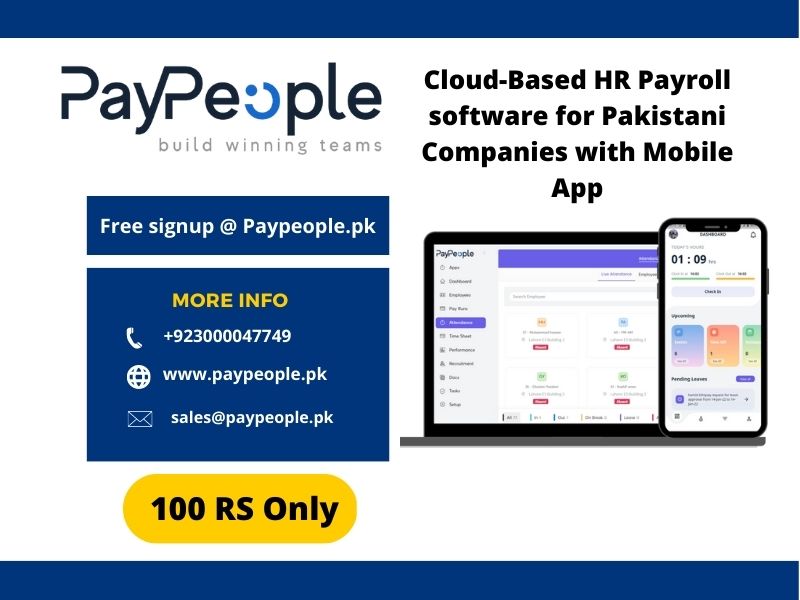


HR software in Pakistan streamlines the complex task of managing employee lifecycles by centralizing master data, document vaults, and reporting hierarchies into a single secure cloud platform. For growing Pakistani SMEs and enterprises, transitioning from manual spreadsheets to an integrated human resource system ensures that every record—from CNIC copies to educational certificates—is digitally organized and accessible only to authorized personnel.
HR software in Pakistan serves as the single source of truth for all personnel information. Instead of scattered Excel sheets, it stores employee master data including personal details, contact info, job history, and emergency contacts in one unified database.
This centralization allows HR managers in cities like Lahore or Karachi to update a record once and have it reflect across attendance and payroll modules instantly.
By moving to a centralized Human Resource Management System (HRMS), companies eliminate data redundancy. When a manager in Islamabad needs to check an employee’s department or designation, they no longer need to call the head office; the cloud-based system provides real-time access based on the user’s permissions.
Modern HR software in Pakistan utilizes role-based access control (RBAC) to ensure that sensitive data like salaries and private documents are only visible to designated officials. This is critical for maintaining confidentiality and preventing data leaks within the organization. Data is typically hosted on secure cloud servers with 256-bit encryption, providing a higher level of security than physical filing cabinets.
Audit trails are an essential feature of these systems, tracking exactly who accessed or modified a record and when. This transparency is vital for corporate governance and internal audits, especially for listed companies or those working under international compliance standards in Pakistan’s growing tech and manufacturing sectors.
Employee Self-Service (ESS) portals transform how HR software in Pakistan handles day-to-day data updates. Employees can log in via mobile or desktop to update their own contact information, view digital payslips, and check their leave balances. This shifts the administrative burden away from the HR department while ensuring that the data remains current.
Through the ESS, staff can also access the “Document Vault” to download their appointment letters or tax certificates. This level of transparency builds trust within the workforce and ensures that employees always have access to their essential career documents without needing to make formal requests to the HR office.
HR software in Pakistan automates the approval ladder for various requests such as leaves, expense claims, and profile updates. When an employee submits a request, the system automatically routes it to their specific reporting manager based on the pre-defined organizational hierarchy. This ensures that no request is lost in an email chain or forgotten on a desk.
Once a manager approves a request—for instance, a change in bank account details for salary disbursement—the system updates the core HR database automatically. This workflow-driven approach reduces manual entry errors and ensures that the payroll department always works with verified, approved data each month.
A digital document vault within HR software in Pakistan allows companies to store scanned copies of CNICs, resumes, degree verifications, and signed contracts. For Pakistani businesses, maintaining these records is essential for labor law compliance and EOBI registration processes. The vault makes retrieval instantaneous during external audits or government inspections.
The system can also be configured to alert HR when certain documents are nearing expiry, such as driving licenses for logistics staff or certifications for specialized technicians. This proactive data management keeps the company compliant and avoids the risks associated with expired documentation.
The synergy between HR software in Pakistan and the payroll module is what provides the greatest ROI. When employee data—such as a promotion, salary revision, or a mid-month exit—is updated in the HRMS, the payroll engine pulls this data directly to calculate the final settlement or the monthly salary. This “one-click” synchronization eliminates the need for manual reconciliation.
Integrated systems ensure that data like bank account numbers, tax IDs (NTN), and EOBI numbers are always consistent. Because there is no manual transfer of data between HR and Finance, the risk of paying the wrong person or using an outdated salary slab is virtually eliminated.
HR software in Pakistan provides real-time organizational charts and reporting hierarchies. This visual representation helps leadership understand the head-count distribution across departments and branches. With built-in analytics, a CFO in Faisalabad can quickly see turnover rates, workforce demographics, and cost-to-company (CTC) metrics without waiting for manual reports.
These reports are data-driven reflections of the master records. Whether you need to report on female-to-male ratios for diversity compliance or track departmental growth over the last quarter, the human resource system generates accurate summaries based on live employee data.
Implementing HR software in Pakistan requires a structured approach to ensure high adoption rates among staff. Starting with a phased rollout—beginning with core HR data and then moving to leaves and self-service—allows employees to get comfortable with the platform without feeling overwhelmed by too many changes at once.
Data migration is the most critical step. Clearing out old, redundant data from spreadsheets before importing it into the new HRMS ensures that your cloud-based system starts with a “clean” database. Training sessions for middle management on how to use the approval workflows are also essential to ensure the system becomes part of the daily operational culture.
| Module | Self-Service | Workflow Builder | Price (PKR/employee/month) |
|---|---|---|---|
| Core HR & Master Data | Included | Standard | Rs. 200 |
| Leave & Expense Management | Included | Advanced | Rs. 150 |
| Full HRMS Suite | Included | Unlimited | Rs. 400 |
Managing employee data no longer has to be a manual burden for Pakistani businesses. By adopting a modern HRMS like PayPeople, you can centralize your records, secure your sensitive information, and empower your employees with self-service tools. Book a demo today to see how we can transform your HR operations.
HR software in Pakistan uses role-based access control (RBAC) and encryption to ensure that sensitive data like salaries or CNIC copies are only accessible to authorized personnel, preventing unauthorized data leaks within the company.
The document vault in an HRMS allows Pakistani companies to store digital copies of contracts, degrees, and CNICs, making it easy to retrieve files for labor inspections or EOBI compliance audits.
An employee self-service portal allows staff in Pakistan to update their own contact details and view payslips, which reduces HR administrative work and ensures the core database remains accurate.
Approval workflows route requests through the correct reporting hierarchy, ensuring that every leave or expense claim is verified by the right manager before the HR database is updated.
When HR profile data like promotions or exits are updated, the payroll module instantly reflects those changes, ensuring that monthly salary processing is based on accurate, real-time Human Resource System records.
Implementing HR software in Pakistan typically involves five steps: scoping your modules, importing your organizational structure, configuring roles, onboarding employees, and training your management team.