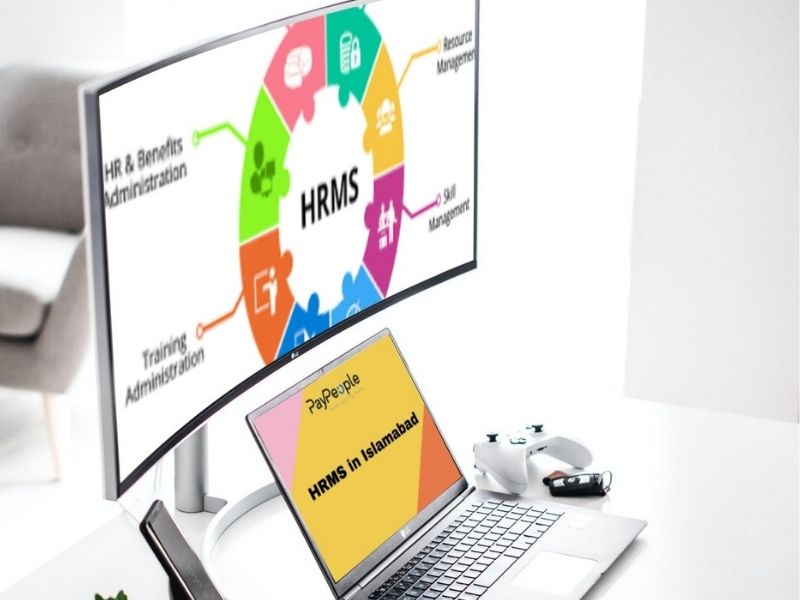

HRMS in Islamabad helps modern organizations transition from manual paperwork to high-performance digital operations by leveraging localized automation for employee data and workflows. As companies in Pakistan’s capital scale, managing a growing workforce requires more than just spreadsheets; it demands a unified platform that secures document vaults, streamlines approvals, and empowers employees through self-service portals.
HRMS in Islamabad provides a centralized digital hub where all employee records, from hiring dates to performance history, are stored securely in a cloud-based document vault. For organizations operating in the capital’s competitive landscape, having instant access to real-time workforce data allows for faster decision-making and significantly reduces the administrative burden on HR departments.
This digital transformation ensures that every department stays synchronized with established company policies and reporting hierarchies.
Digital HR software allows Islamabad-based businesses to map out complex organizational structures and multi-layered reporting hierarchies with ease. Whether your company has multiple branches across the city or a centralized head office in Blue Area, the system visualizes reporting lines and ensures that every employee knows their role within the bigger picture.
This structural clarity is essential for maintaining order and ensures that performance reviews and task assignments follow the correct chain of command automatically.
An employee self-service (ESS) portal is a cornerstone of modern HRMS, allowing staff members to update personal information, view their own digital profiles, and check company announcements without contacting HR. By providing employees with direct access to their data, organizations in Islamabad see a boost in transparency and employee engagement.
Staff can manage their own professional details, reducing the time HR officers spend on routine data entry and manual corrections.
Automated approval workflows replace the slow process of manual signatures with a digital sequence for leave requests, expense claims, and reimbursements. When an employee submits a request via the HRMS, the system automatically routes it to the designated manager based on the pre-configured reporting hierarchy.
This ensures that no request is lost in an inbox and that all approvals are tracked with a clear audit trail, which is vital for internal compliance and financial accountability.
Role-based access control (RBAC) ensures that sensitive HR data is only visible to authorized personnel, protecting employee privacy and company confidentiality.
In an HRMS, you can define specific permissions for HR managers, department heads, and general staff, ensuring that a junior employee cannot see the salary details or confidential documents of their peers. This level of security is essential for organizations in Islamabad that handle high volumes of sensitive professional data and must comply with modern data protection standards.
Most HRMS platforms in Pakistan are designed to integrate seamlessly with core modules like payroll and attendance to eliminate data silos. By linking employee master data with daily time logs and monthly salary cycles, the software ensures that information flows naturally from the biometric terminal to the final payslip.
This integration prevents “ghost employees” and ensures that every rupee paid is backed by verified attendance and valid contract data stored within the HRMS.
| Module | Self-Service | Workflow Builder | Price (PKR/employee/month) |
|---|---|---|---|
| Core HR & Employee Vault | Yes | Basic | Rs. 200 |
| HRMS + Leave Management | Yes | Advanced | Rs. 350 |
| Full ERP-Grade HRMS | Yes | Unlimited | Rs. 500 |
Adopting a robust HRMS in Islamabad is no longer just a trend; it is a strategic necessity for organizations aiming for sustainable growth and digital excellence. By centralizing management and automating routine tasks, your team can focus on what truly matters: people. Book a demo today to see how PayPeople can transform your office operations.
SMEs in Islamabad Trends Define Future Organizations Cc74314 adopt HRMS in Islamabad from PayPeople for three repeatable reasons: native EOBI / SESSI / PESSI and FBR-tax-slab handling, per-employee-per-month PKR billing that scales with headcount, and a Pakistan-based support team that answers in working hours. Most teams move off Excel or a legacy desktop HRMS once the monthly payroll run takes more than two working days, or once a multi-branch payroll consolidation becomes a source of reconciliation errors.
The most-used modules in Islamabad Trends Define Future Organizations Cc74314 are payroll, biometric attendance and leave — these three together cover 80% of the day-to-day HR workload for a 50–250-employee SME. Recruitment, performance and expense modules are typically rolled out in a second phase 60–90 days after go-live, once managers are comfortable with self-service and approval workflows. PayPeople bills per-employee-per-month in PKR, starting around Rs. 400 for core HR + payroll, with volume discounts above 100 employees and custom enterprise pricing for multi-branch setups.
Compliance is the deal-decider. EOBI and SESSI/PESSI contribution rates are maintained centrally and pushed to every customer’s payroll run, so you don’t manually patch tax tables when the federal budget changes. FBR income-tax slabs for salaried employees update the same way. The full monthly return — EOBI form, SESSI/PESSI form, FBR salary withholding statement — is generated from one screen, signed off and archived in the audit trail. Multi-branch payroll consolidates into a single GL-coded export ready for the accounting team.
Getting started in Islamabad Trends Define Future Organizations Cc74314: book a 30-minute demo at paypeople.pk/book-a-demo, the team hands you a 7-day sandbox with sample employees and a pre-configured tax slab, and you run one parallel-payroll month against your existing process before cutover. Total go-live for a typical Pakistani SME is 2–4 weeks; multi-branch enterprise rollouts take 6–8 weeks. WhatsApp +92 300 0800498 or email sales@paypeople.pk to start.
HRMS in Islamabad provides a centralized digital vault for employee contracts, degrees, and IDs. It automates leave and expense workflows, reduces manual data entry through self-service portals, and ensures clear reporting hierarchies, which are essential for the scaling organizations found in Pakistan’s capital.
Yes, modern HRMS in Islamabad uses role-based access control (RBAC) to ensure that sensitive information like salary data and personal documents are only accessible to authorized HR personnel, protecting your organization from internal data breaches.
The employee self-service portal allows staff in Islamabad to apply for leaves, view company policies, and update their personal profiles directly. This reduces the administrative load on HR and increases transparency across the organization.
Absolutely. A central feature of HRMS in Islamabad is the ability to map out complex org charts and reporting lines. This ensures that digital approval requests for expenses or leaves are automatically routed to the correct manager.
Implementation for a medium-sized SME in Islamabad typically takes 1 to 2 weeks. This includes importing your organization structure, setting up employee profiles, and training your team on the new self-service tools.
PayPeople offers affordable, per-employee-per-month pricing starting at approximately Rs. 200 to Rs. 500. This localized pricing ensures that Islamabad businesses only pay for the number of active users they actually manage in the system.