


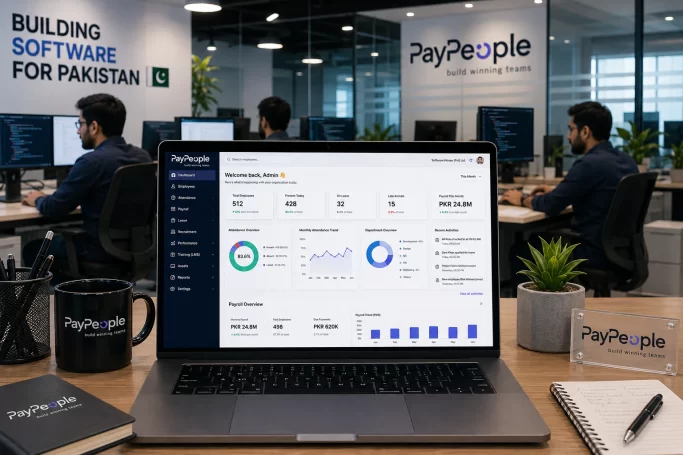
Managing human operations in a Pakistani IT house or software export agency comes with distinct operational pressures: developers working across night shifts, offshore client billing tied to Jira tickets, dual-currency payouts (USD, EUR, GBP converted to PKR), high employee turnover, and stringent FBR tax withholding rules under Section 153 and Section 149.
Off-the-shelf spreadsheets and rigid corporate HR systems break down when applied to agile software development environments. PayPeople delivers an automated, IT-first HRMS built explicitly to bridge project accounting, tech recruitment pipelines, complex shift rosters, and local Pakistani legal compliance.
Software houses operate on project profitability, billable utilization, and talent retention. Generic HR software treats employees as static 9-to-5 workers, missing the key realities of modern tech teams.
┌────────────────────────────────────────────────────────┐
│ Pakistani IT House HR Pipeline │
└───────────────────────────┬────────────────────────────┘
│
┌─────────────────────────┼────────────────────────┐
▼ ▼ ▼
┌──────────────────┐ ┌─────────────────────┐ ┌──────────────────┐
│ Tech Talent & │ │ Dual-Currency & │ │ Project Time │
│ Offer Dropouts │ │ Offshore Compensation│ │ & Jira Billing │
└──────────────────┘ └─────────────────────┘ └──────────────────┘
IT export firms frequently offer base compensation pegged to USD, EUR, or GBP, or disburse performance bonuses tied to foreign exchange rates. Calculating tax brackets, EOBI, and Provident Fund deductions while converting fluctuating exchange rates into PKR at payday creates immense manual overhead for finance teams.
Software developers log time across client projects using Jira, Asana, or ClickUp. Traditional attendance systems only record door punch-ins, leaving engineering managers with no visibility into whether hours billed align with actual payroll expenses and project profitability.
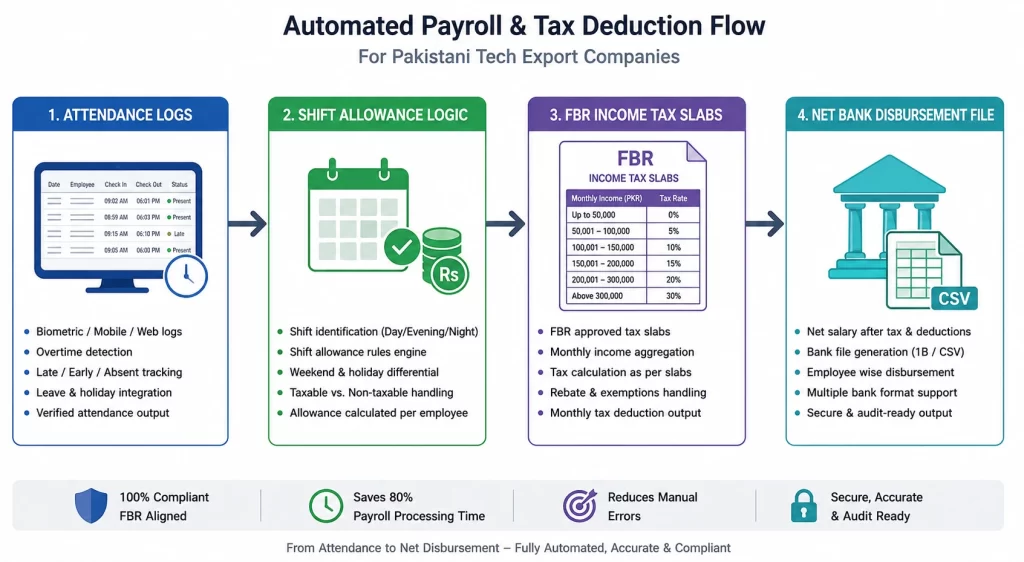
Pakistani tech agencies supporting US, European, or Australian clients run round-the-clock shift patterns (Morning, Afternoon, Night). HR platforms must dynamically adjust attendance policies, shift differential allowances, and remote check-ins without flagging valid work hours as absenteeism.
With tech turnover averaging 20–30% in Pakistan’s software sector, managing asset returns (laptops, monitors), IP rights releases, immediate access revocations, and final settlement calculations requires automated workflows to prevent security breaches and data leaks.
| Operational Requirement | Generic HR Software | PayPeople IT-Focused HRMS |
| USD/Foreign Exchange Payroll | Manual spreadsheet calculation before PKR entry | Automated multi-currency payout rules with bank-rate conversions |
| Attendance & Shift Rules | Static office hours (9 AM – 5 PM) | Flexible hybrid shifts, geofenced mobile check-ins, night allowances |
| Tax Compliance | Manual income tax slabs | Automated Section 149 income tax & FBR monthly withholding reports |
| Project Time Tracking | Separate standalone software | Direct sync with project hours for accurate client billability |
| Offboarding Security | Email reminders to IT department | 1-Click access revocation & asset recovery tracking workflow |
Running tech operations in Pakistan requires strict adherence to local labor laws, social security institutions, and tax authorities. PayPeople automates compliance out of the box.
Implementing PayPeople across your engineering and operations teams is designed for speed, ensuring zero disruption to active sprint cycles or payroll dates.
1.Requirements & Organizational Setup:Days 1–3.
2.Shift Roster & Attendance Integration:Days 4–7.
3.Payroll & Tax Slabs Verification:Days 8–10.
4.Team Onboarding & Go-Live:Days 11–14.
Scale your IT firm without administrative friction. PayPeople eliminates hours of manual data entry, guarantees tax compliance, and gives your engineering managers visibility into attendance and project time tracking.